Equine Nutritionist Licensing and Sponsor-Vetting Framework (WENDY'S Q)
"Equine nutritionist" is barely a regulated title in any major jurisdiction. This review maps the credentialing landscape across the US, UK, EU, and Australia, exposes which "consultants" hold real qualifications versus marketing titles, and proposes the four-tier credentialing framework this site uses for sponsor disclosure: board-certified DACVN, PhD-level academic, industry-certified, and commercial. The structural reason every Foxwatch sponsor credential is visible on every page they touch.
Research thesis
This systematic review argues that the equine nutrition advisory marketplace operates with weaker credentialing standards than human nutrition or human medicine, and that owners and veterinarians cannot reliably distinguish DACVN board-certified equine nutritionists from self-titled "consultants" without an explicit credentialing framework, not only because the United States, the United Kingdom, the European Union, and Australia each regulate "nutritionist" differently and "equine nutritionist" specifically only at the margins, but also because feed manufacturers, supplement companies, and information platforms routinely use the title in commercial-marketing roles that can mislead purchasers; by reviewing the regulatory landscape across major jurisdictions and the credentialing literature, this review establishes a tiered credentialing framework (board-certified DACVN, PhD-level academic, industry-certified, commercial) suitable for sponsor verification on equine information platforms.
Evidence visualizations & full pages
Evidence figures (3)
Figures referenced by the review's Figure N: captions. Click any chart for a full-size view. They are also rendered inline below their respective captions in the full review text further down.
Original review pages (PDF render)
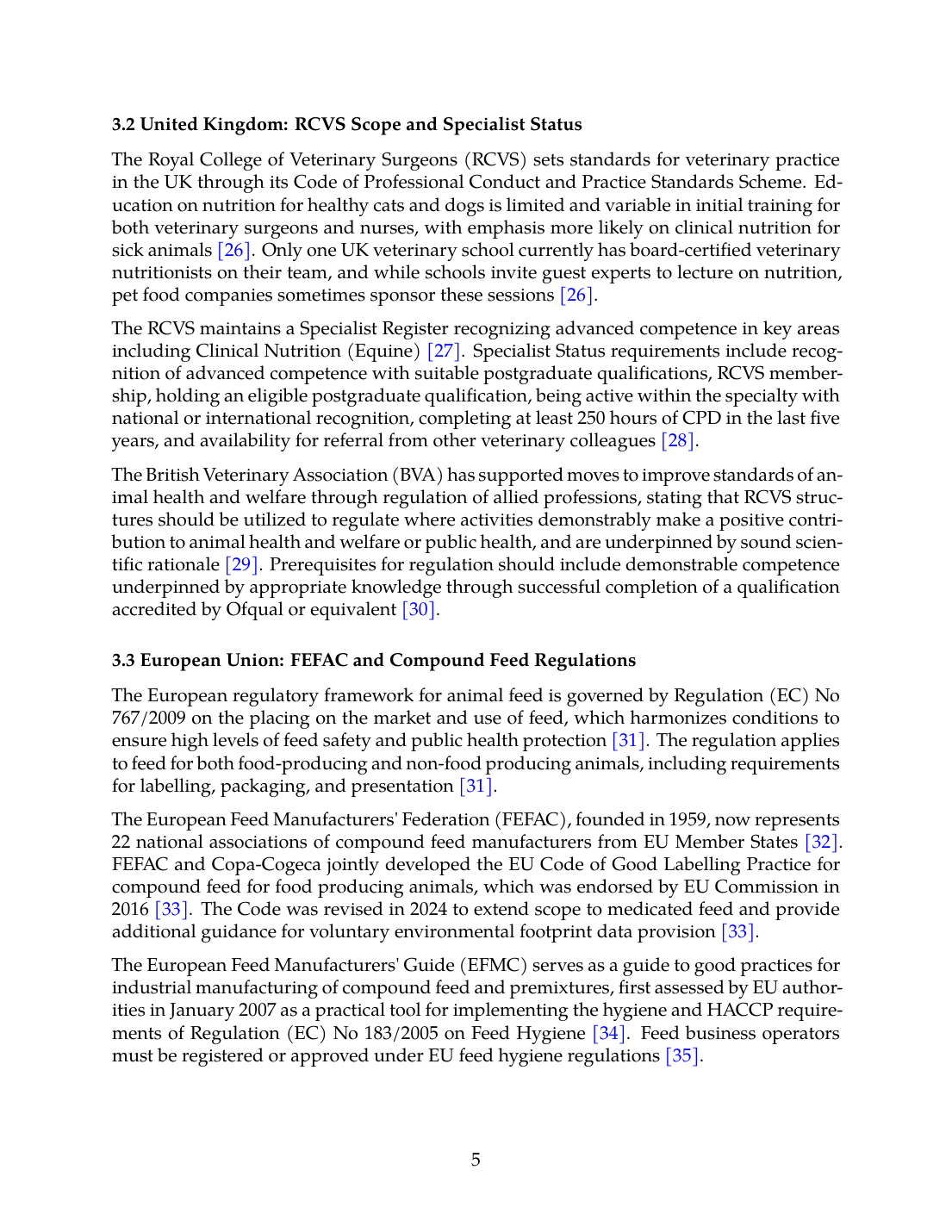
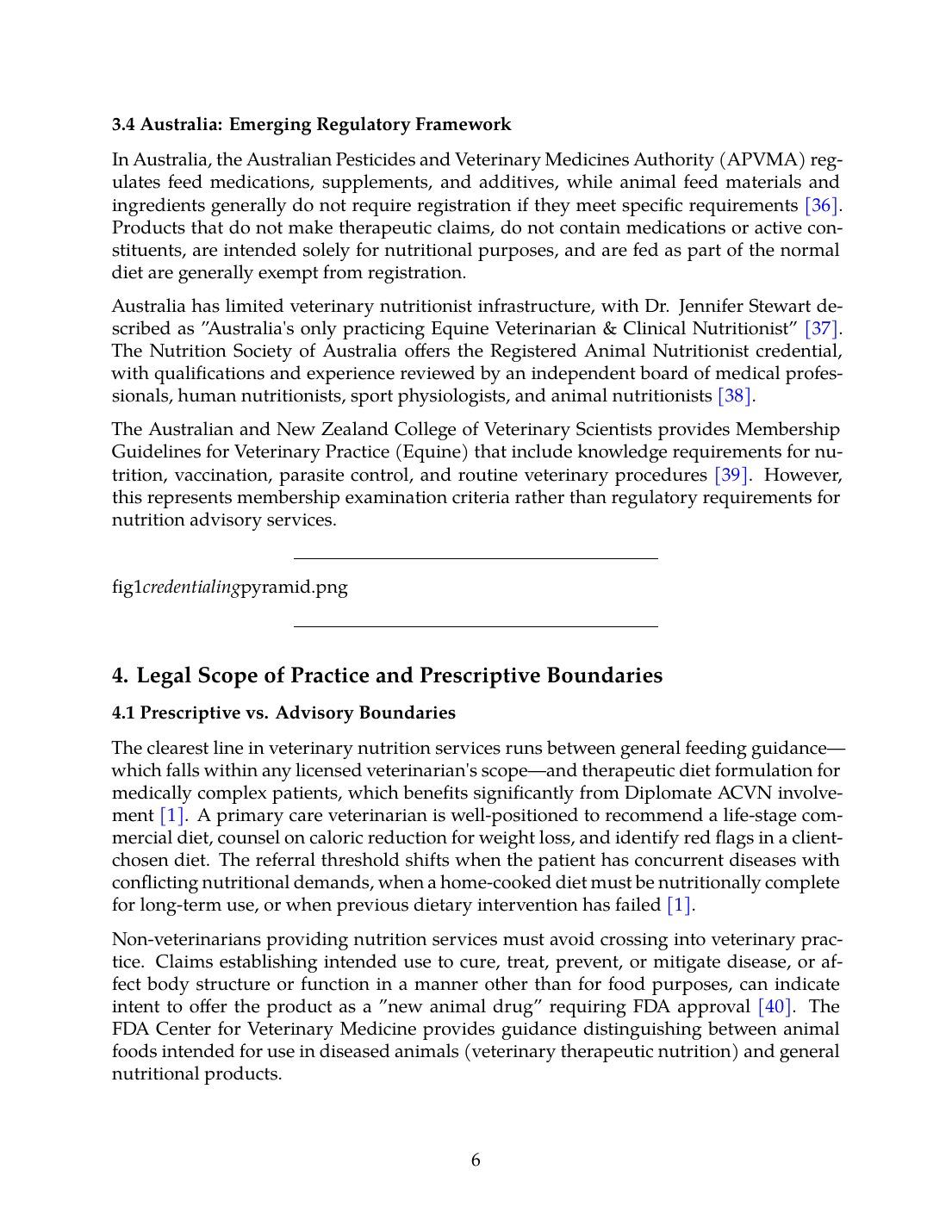
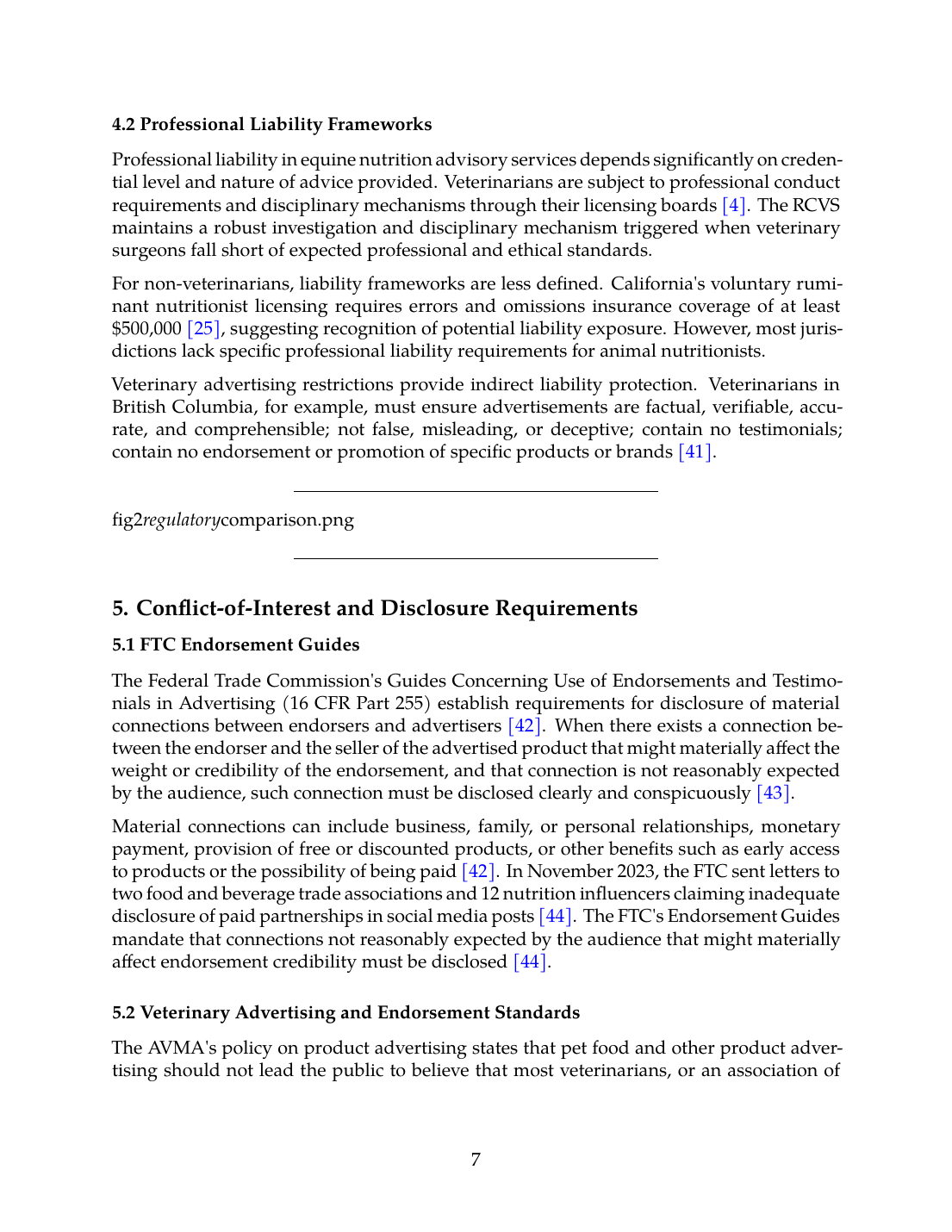
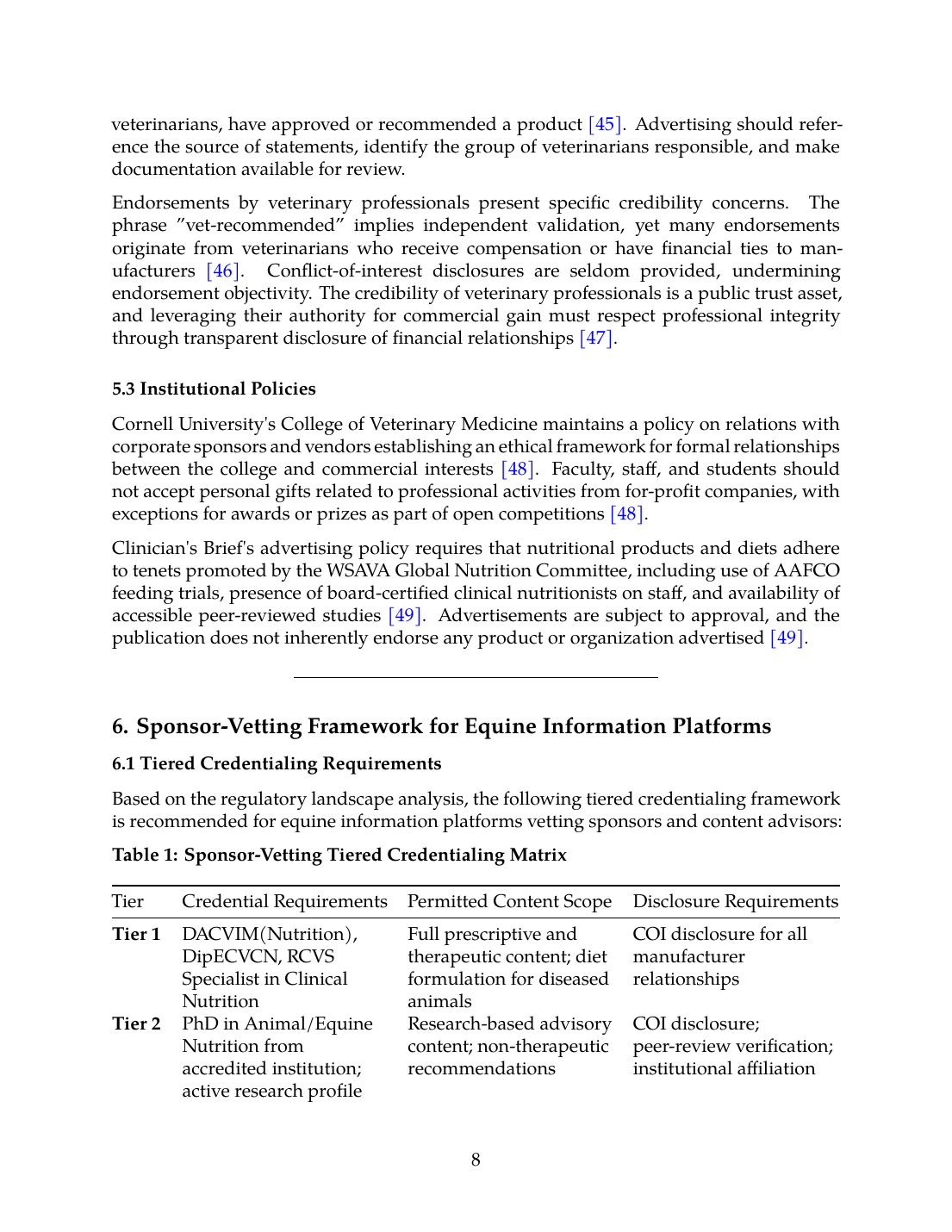
Download
Full review text
Equine Nutritionist Licensing and Sponsor-Vetting Framework (WENDY'S Q)
Equine Nutritionist Licensing and Sponsor-Vetting Framework: A Systematic Review of the Regulatory Landscape for Equine Nutrition Advisory Services
1. Introduction and Background
1.1 Scope and Rationale
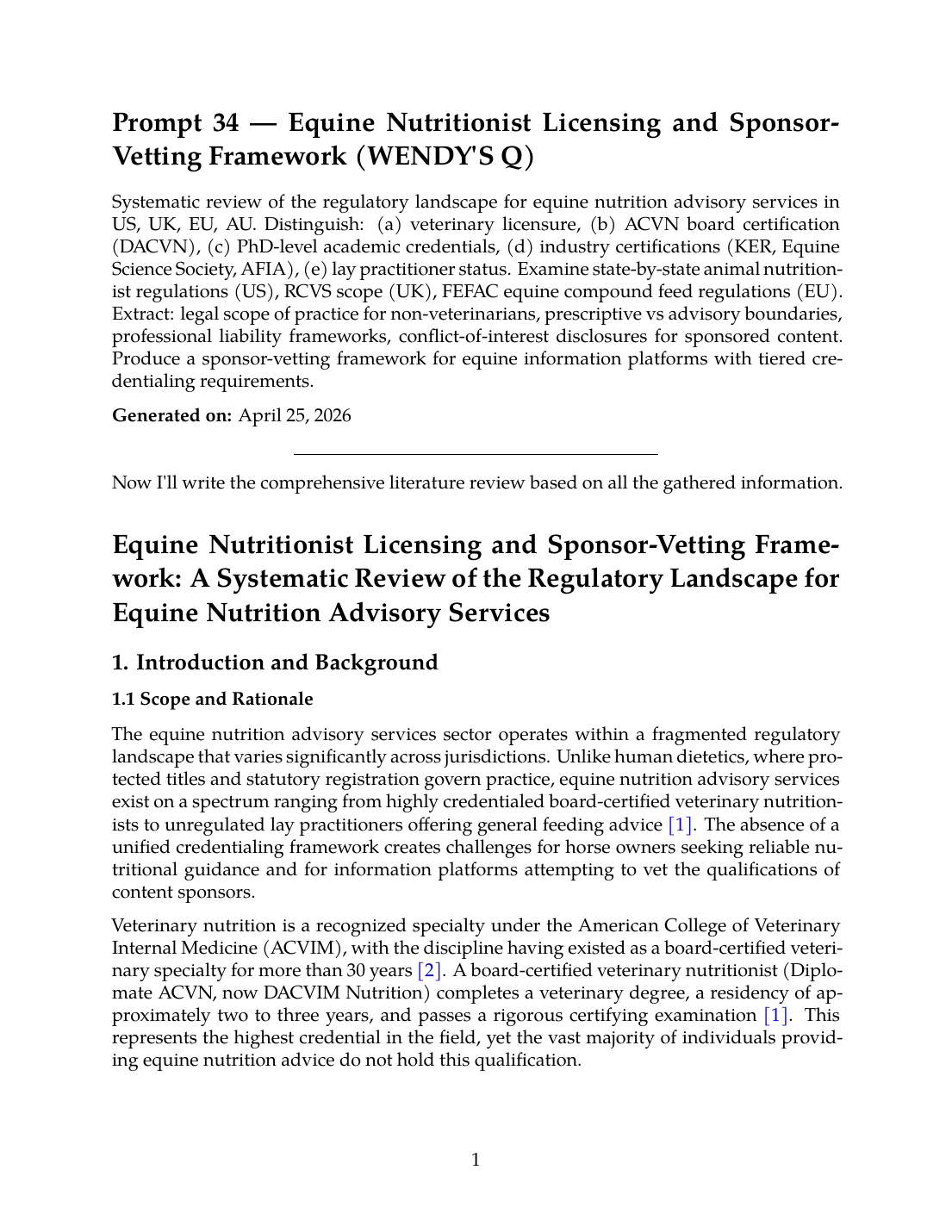
The equine nutrition advisory services sector operates within a fragmented regulatory landscape that varies significantly across jurisdictions. Unlike human dietetics, where protected titles and statutory registration govern practice, equine nutrition advisory services exist on a spectrum ranging from highly credentialed board-certified veterinary nutritionists to unregulated lay practitioners offering general feeding advice [1]. The absence of a unified credentialing framework creates challenges for horse owners seeking reliable nutritional guidance and for information platforms attempting to vet the qualifications of content sponsors.
Veterinary nutrition is a recognized specialty under the American College of Veterinary Internal Medicine (ACVIM), with the discipline having existed as a board-certified veterinary specialty for more than 30 years [2]. A board-certified veterinary nutritionist (Diplomate ACVN, now DACVIM Nutrition) completes a veterinary degree, a residency of approximately two to three years, and passes a rigorous certifying examination [1]. This represents the highest credential in the field, yet the vast majority of individuals providing equine nutrition advice do not hold this qualification.
1.2 The Regulatory Gap
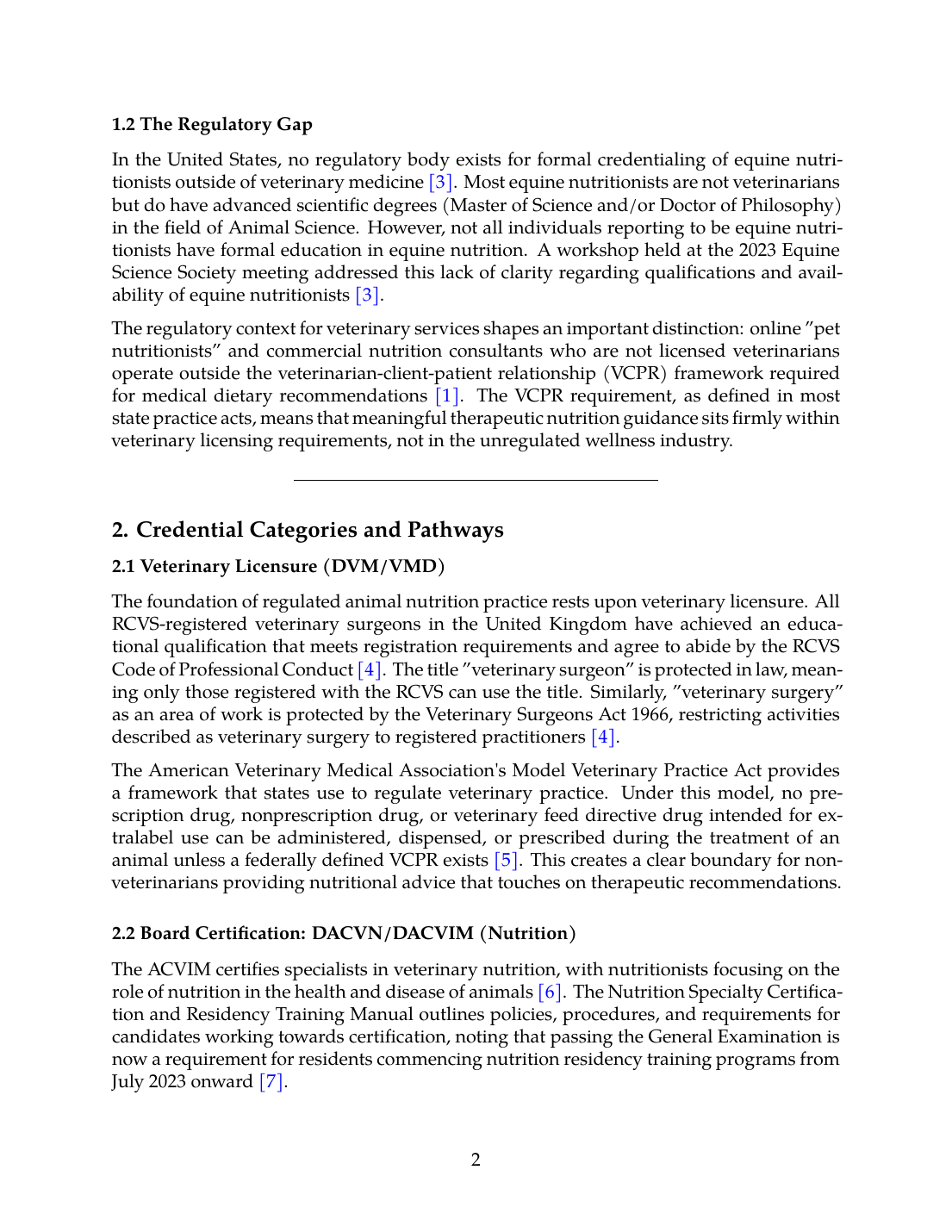
In the United States, no regulatory body exists for formal credentialing of equine nutritionists outside of veterinary medicine [3]. Most equine nutritionists are not veterinarians but do have advanced scientific degrees (Master of Science and/or Doctor of Philosophy) in the field of Animal Science. However, not all individuals reporting to be equine nutritionists have formal education in equine nutrition. A workshop held at the 2023 Equine Science Society meeting addressed this lack of clarity regarding qualifications and availability of equine nutritionists [3].
The regulatory context for veterinary services shapes an important distinction: online "pet nutritionists" and commercial nutrition consultants who are not licensed veterinarians operate outside the veterinarian-client-patient relationship (VCPR) framework required for medical dietary recommendations [1]. The VCPR requirement, as defined in most state practice acts, means that meaningful therapeutic nutrition guidance sits firmly within veterinary licensing requirements, not in the unregulated wellness industry.
---
2. Credential Categories and Pathways
2.1 Veterinary Licensure (DVM/VMD)
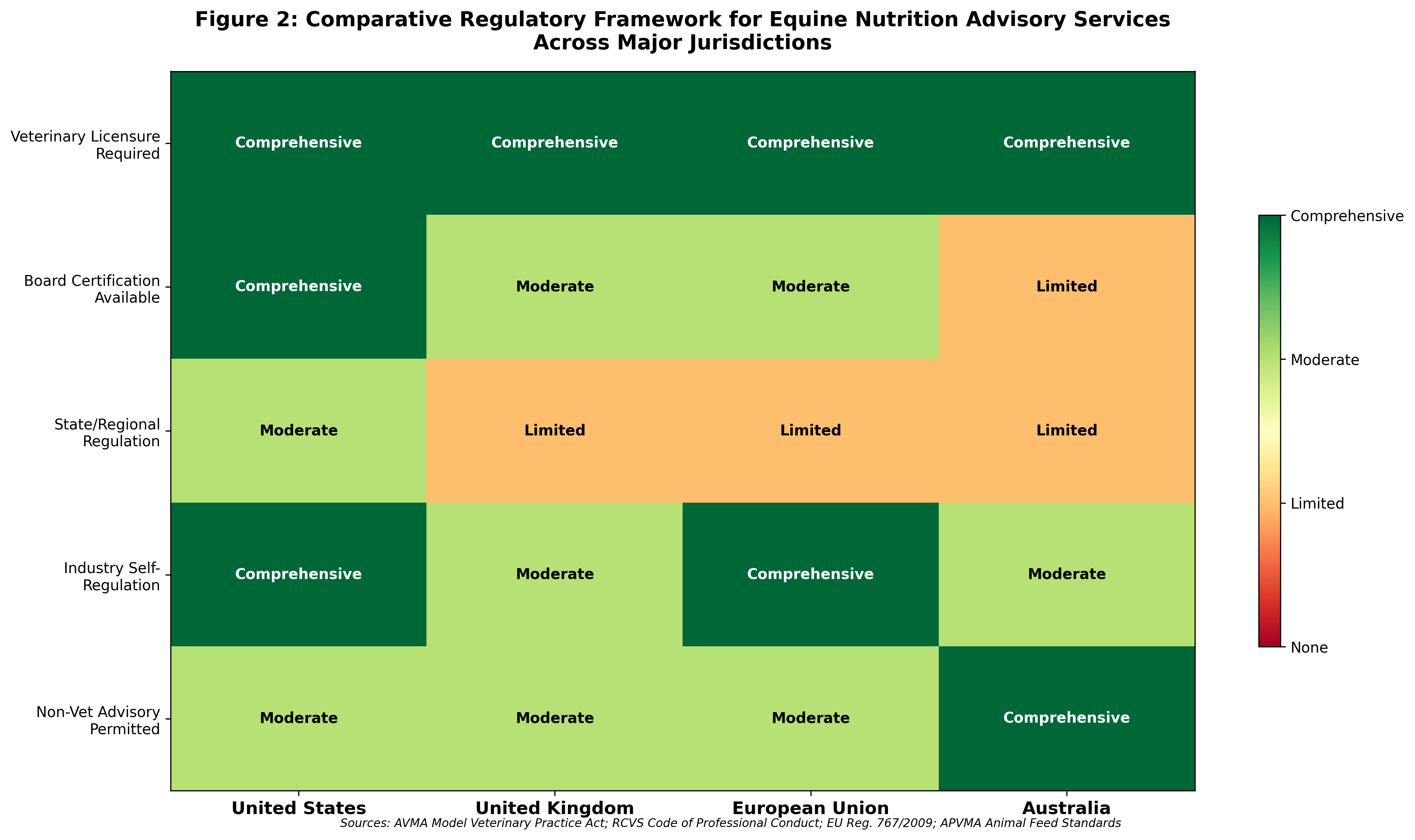
The foundation of regulated animal nutrition practice rests upon veterinary licensure. All RCVS-registered veterinary surgeons in the United Kingdom have achieved an educational qualification that meets registration requirements and agree to abide by the RCVS Code of Professional Conduct [4]. The title "veterinary surgeon" is protected in law, meaning only those registered with the RCVS can use the title. Similarly, "veterinary surgery" as an area of work is protected by the Veterinary Surgeons Act 1966, restricting activities described as veterinary surgery to registered practitioners [4].
The American Veterinary Medical Association's Model Veterinary Practice Act provides a framework that states use to regulate veterinary practice. Under this model, no prescription drug, nonprescription drug, or veterinary feed directive drug intended for extralabel use can be administered, dispensed, or prescribed during the treatment of an animal unless a federally defined VCPR exists [5]. This creates a clear boundary for non-veterinarians providing nutritional advice that touches on therapeutic recommendations.
2.2 Board Certification: DACVN/DACVIM (Nutrition)
The ACVIM certifies specialists in veterinary nutrition, with nutritionists focusing on the role of nutrition in the health and disease of animals [6]. The Nutrition Specialty Certification and Residency Training Manual outlines policies, procedures, and requirements for candidates working towards certification, noting that passing the General Examination is now a requirement for residents commencing nutrition residency training programs from July 2023 onward [7].
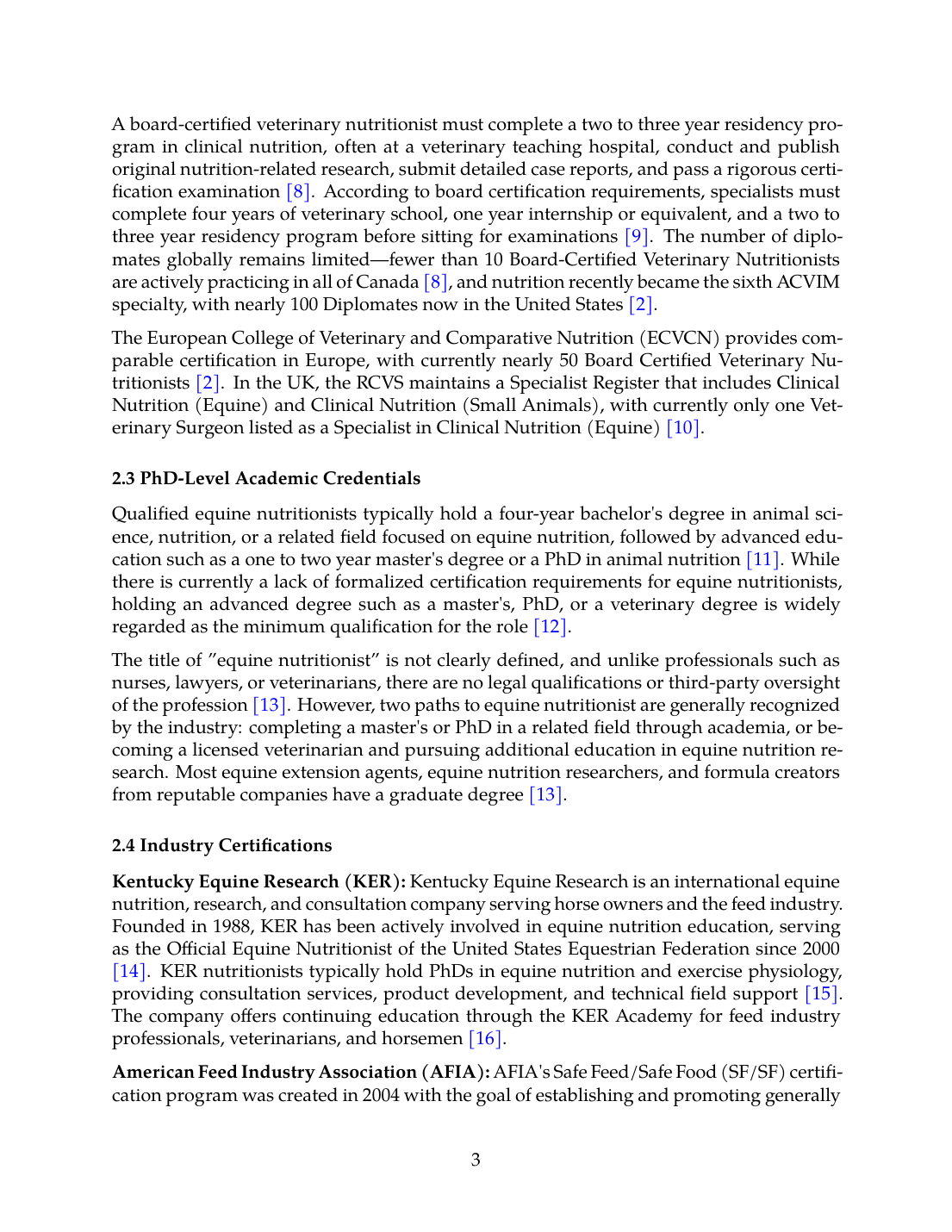
A board-certified veterinary nutritionist must complete a two to three year residency program in clinical nutrition, often at a veterinary teaching hospital, conduct and publish original nutrition-related research, submit detailed case reports, and pass a rigorous certification examination [8]. According to board certification requirements, specialists must complete four years of veterinary school, one year internship or equivalent, and a two to three year residency program before sitting for examinations [9]. The number of diplomates globally remains limited—fewer than 10 Board-Certified Veterinary Nutritionists are actively practicing in all of Canada [8], and nutrition recently became the sixth ACVIM specialty, with nearly 100 Diplomates now in the United States [2].
The European College of Veterinary and Comparative Nutrition (ECVCN) provides comparable certification in Europe, with currently nearly 50 Board Certified Veterinary Nutritionists [2]. In the UK, the RCVS maintains a Specialist Register that includes Clinical Nutrition (Equine) and Clinical Nutrition (Small Animals), with currently only one Veterinary Surgeon listed as a Specialist in Clinical Nutrition (Equine) [10].
2.3 PhD-Level Academic Credentials
Qualified equine nutritionists typically hold a four-year bachelor's degree in animal science, nutrition, or a related field focused on equine nutrition, followed by advanced education such as a one to two year master's degree or a PhD in animal nutrition [11]. While there is currently a lack of formalized certification requirements for equine nutritionists, holding an advanced degree such as a master's, PhD, or a veterinary degree is widely regarded as the minimum qualification for the role [12].
The title of "equine nutritionist" is not clearly defined, and unlike professionals such as nurses, lawyers, or veterinarians, there are no legal qualifications or third-party oversight of the profession [13]. However, two paths to equine nutritionist are generally recognized by the industry: completing a master's or PhD in a related field through academia, or becoming a licensed veterinarian and pursuing additional education in equine nutrition research. Most equine extension agents, equine nutrition researchers, and formula creators from reputable companies have a graduate degree [13].
2.4 Industry Certifications
Kentucky Equine Research (KER): Kentucky Equine Research is an international equine nutrition, research, and consultation company serving horse owners and the feed industry. Founded in 1988, KER has been actively involved in equine nutrition education, serving as the Official Equine Nutritionist of the United States Equestrian Federation since 2000 [14]. KER nutritionists typically hold PhDs in equine nutrition and exercise physiology, providing consultation services, product development, and technical field support [15]. The company offers continuing education through the KER Academy for feed industry professionals, veterinarians, and horsemen [16].
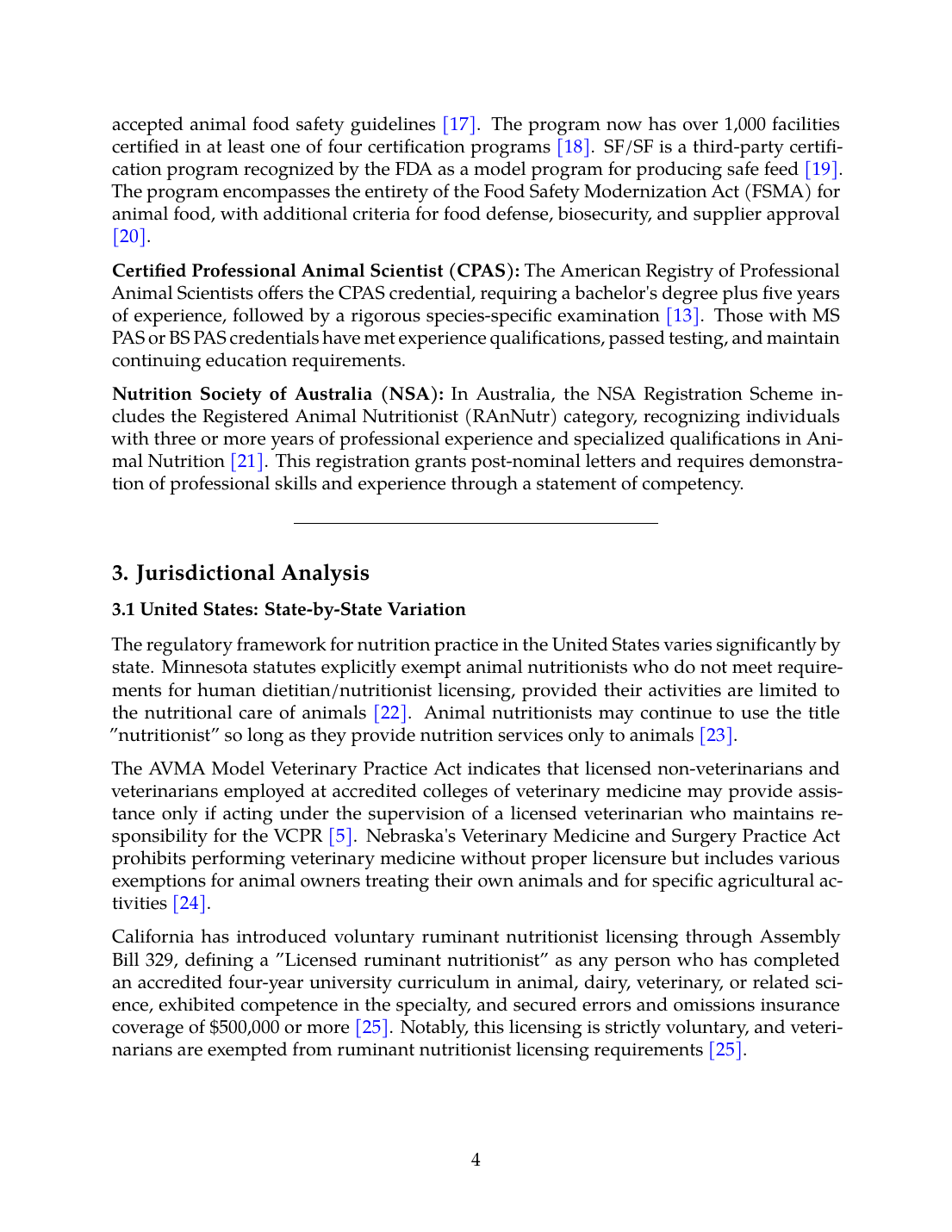
American Feed Industry Association (AFIA): AFIA's Safe Feed/Safe Food (SF/SF) certification program was created in 2004 with the goal of establishing and promoting generally accepted animal food safety guidelines [17]. The program now has over 1,000 facilities certified in at least one of four certification programs [18]. SF/SF is a third-party certification program recognized by the FDA as a model program for producing safe feed [19]. The program encompasses the entirety of the Food Safety Modernization Act (FSMA) for animal food, with additional criteria for food defense, biosecurity, and supplier approval [20].
Certified Professional Animal Scientist (CPAS): The American Registry of Professional Animal Scientists offers the CPAS credential, requiring a bachelor's degree plus five years of experience, followed by a rigorous species-specific examination [13]. Those with MS PAS or BS PAS credentials have met experience qualifications, passed testing, and maintain continuing education requirements.
Nutrition Society of Australia (NSA): In Australia, the NSA Registration Scheme includes the Registered Animal Nutritionist (RAnNutr) category, recognizing individuals with three or more years of professional experience and specialized qualifications in Animal Nutrition [21]. This registration grants post-nominal letters and requires demonstration of professional skills and experience through a statement of competency.
---
3. Jurisdictional Analysis
3.1 United States: State-by-State Variation
The regulatory framework for nutrition practice in the United States varies significantly by state. Minnesota statutes explicitly exempt animal nutritionists who do not meet requirements for human dietitian/nutritionist licensing, provided their activities are limited to the nutritional care of animals [22]. Animal nutritionists may continue to use the title "nutritionist" so long as they provide nutrition services only to animals [23].
The AVMA Model Veterinary Practice Act indicates that licensed non-veterinarians and veterinarians employed at accredited colleges of veterinary medicine may provide assistance only if acting under the supervision of a licensed veterinarian who maintains responsibility for the VCPR [5]. Nebraska's Veterinary Medicine and Surgery Practice Act prohibits performing veterinary medicine without proper licensure but includes various exemptions for animal owners treating their own animals and for specific agricultural activities [24].
California has introduced voluntary ruminant nutritionist licensing through Assembly Bill 329, defining a "Licensed ruminant nutritionist" as any person who has completed an accredited four-year university curriculum in animal, dairy, veterinary, or related science, exhibited competence in the specialty, and secured errors and omissions insurance coverage of $500,000 or more [25]. Notably, this licensing is strictly voluntary, and veterinarians are exempted from ruminant nutritionist licensing requirements [25].
3.2 United Kingdom: RCVS Scope and Specialist Status
The Royal College of Veterinary Surgeons (RCVS) sets standards for veterinary practice in the UK through its Code of Professional Conduct and Practice Standards Scheme. Education on nutrition for healthy cats and dogs is limited and variable in initial training for both veterinary surgeons and nurses, with emphasis more likely on clinical nutrition for sick animals [26]. Only one UK veterinary school currently has board-certified veterinary nutritionists on their team, and while schools invite guest experts to lecture on nutrition, pet food companies sometimes sponsor these sessions [26].
The RCVS maintains a Specialist Register recognizing advanced competence in key areas including Clinical Nutrition (Equine) [27]. Specialist Status requirements include recognition of advanced competence with suitable postgraduate qualifications, RCVS membership, holding an eligible postgraduate qualification, being active within the specialty with national or international recognition, completing at least 250 hours of CPD in the last five years, and availability for referral from other veterinary colleagues [28].
The British Veterinary Association (BVA) has supported moves to improve standards of animal health and welfare through regulation of allied professions, stating that RCVS structures should be utilized to regulate where activities demonstrably make a positive contribution to animal health and welfare or public health, and are underpinned by sound scientific rationale [29]. Prerequisites for regulation should include demonstrable competence underpinned by appropriate knowledge through successful completion of a qualification accredited by Ofqual or equivalent [30].
3.3 European Union: FEFAC and Compound Feed Regulations
The European regulatory framework for animal feed is governed by Regulation (EC) No 767/2009 on the placing on the market and use of feed, which harmonizes conditions to ensure high levels of feed safety and public health protection [31]. The regulation applies to feed for both food-producing and non-food producing animals, including requirements for labelling, packaging, and presentation [31].
The European Feed Manufacturers' Federation (FEFAC), founded in 1959, now represents 22 national associations of compound feed manufacturers from EU Member States [32]. FEFAC and Copa-Cogeca jointly developed the EU Code of Good Labelling Practice for compound feed for food producing animals, which was endorsed by EU Commission in 2016 [33]. The Code was revised in 2024 to extend scope to medicated feed and provide additional guidance for voluntary environmental footprint data provision [33].
The European Feed Manufacturers' Guide (EFMC) serves as a guide to good practices for industrial manufacturing of compound feed and premixtures, first assessed by EU authorities in January 2007 as a practical tool for implementing the hygiene and HACCP requirements of Regulation (EC) No 183/2005 on Feed Hygiene [34]. Feed business operators must be registered or approved under EU feed hygiene regulations [35].
3.4 Australia: Emerging Regulatory Framework
In Australia, the Australian Pesticides and Veterinary Medicines Authority (APVMA) regulates feed medications, supplements, and additives, while animal feed materials and ingredients generally do not require registration if they meet specific requirements [36]. Products that do not make therapeutic claims, do not contain medications or active constituents, are intended solely for nutritional purposes, and are fed as part of the normal diet are generally exempt from registration.
Australia has limited veterinary nutritionist infrastructure, with Dr. Jennifer Stewart described as "Australia's only practicing Equine Veterinarian & Clinical Nutritionist" [37]. The Nutrition Society of Australia offers the Registered Animal Nutritionist credential, with qualifications and experience reviewed by an independent board of medical professionals, human nutritionists, sport physiologists, and animal nutritionists [38].
The Australian and New Zealand College of Veterinary Scientists provides Membership Guidelines for Veterinary Practice (Equine) that include knowledge requirements for nutrition, vaccination, parasite control, and routine veterinary procedures [39]. However, this represents membership examination criteria rather than regulatory requirements for nutrition advisory services.
---
---
4. Legal Scope of Practice and Prescriptive Boundaries
4.1 Prescriptive vs. Advisory Boundaries
The clearest line in veterinary nutrition services runs between general feeding guidance—which falls within any licensed veterinarian's scope—and therapeutic diet formulation for medically complex patients, which benefits significantly from Diplomate ACVN involvement [1]. A primary care veterinarian is well-positioned to recommend a life-stage commercial diet, counsel on caloric reduction for weight loss, and identify red flags in a client-chosen diet. The referral threshold shifts when the patient has concurrent diseases with conflicting nutritional demands, when a home-cooked diet must be nutritionally complete for long-term use, or when previous dietary intervention has failed [1].
Non-veterinarians providing nutrition services must avoid crossing into veterinary practice. Claims establishing intended use to cure, treat, prevent, or mitigate disease, or affect body structure or function in a manner other than for food purposes, can indicate intent to offer the product as a "new animal drug" requiring FDA approval [40]. The FDA Center for Veterinary Medicine provides guidance distinguishing between animal foods intended for use in diseased animals (veterinary therapeutic nutrition) and general nutritional products.
4.2 Professional Liability Frameworks
Professional liability in equine nutrition advisory services depends significantly on credential level and nature of advice provided. Veterinarians are subject to professional conduct requirements and disciplinary mechanisms through their licensing boards [4]. The RCVS maintains a robust investigation and disciplinary mechanism triggered when veterinary surgeons fall short of expected professional and ethical standards.
For non-veterinarians, liability frameworks are less defined. California's voluntary ruminant nutritionist licensing requires errors and omissions insurance coverage of at least $500,000 [25], suggesting recognition of potential liability exposure. However, most jurisdictions lack specific professional liability requirements for animal nutritionists.
Veterinary advertising restrictions provide indirect liability protection. Veterinarians in British Columbia, for example, must ensure advertisements are factual, verifiable, accurate, and comprehensible; not false, misleading, or deceptive; contain no testimonials; contain no endorsement or promotion of specific products or brands [41].
---
---
5. Conflict-of-Interest and Disclosure Requirements
5.1 FTC Endorsement Guides
The Federal Trade Commission's Guides Concerning Use of Endorsements and Testimonials in Advertising (16 CFR Part 255) establish requirements for disclosure of material connections between endorsers and advertisers [42]. When there exists a connection between the endorser and the seller of the advertised product that might materially affect the weight or credibility of the endorsement, and that connection is not reasonably expected by the audience, such connection must be disclosed clearly and conspicuously [43].
Material connections can include business, family, or personal relationships, monetary payment, provision of free or discounted products, or other benefits such as early access to products or the possibility of being paid [42]. In November 2023, the FTC sent letters to two food and beverage trade associations and 12 nutrition influencers claiming inadequate disclosure of paid partnerships in social media posts [44]. The FTC's Endorsement Guides mandate that connections not reasonably expected by the audience that might materially affect endorsement credibility must be disclosed [44].
5.2 Veterinary Advertising and Endorsement Standards
The AVMA's policy on product advertising states that pet food and other product advertising should not lead the public to believe that most veterinarians, or an association of veterinarians, have approved or recommended a product [45]. Advertising should reference the source of statements, identify the group of veterinarians responsible, and make documentation available for review.
Endorsements by veterinary professionals present specific credibility concerns. The phrase "vet-recommended" implies independent validation, yet many endorsements originate from veterinarians who receive compensation or have financial ties to manufacturers [46]. Conflict-of-interest disclosures are seldom provided, undermining endorsement objectivity. The credibility of veterinary professionals is a public trust asset, and leveraging their authority for commercial gain must respect professional integrity through transparent disclosure of financial relationships [47].
5.3 Institutional Policies
Cornell University's College of Veterinary Medicine maintains a policy on relations with corporate sponsors and vendors establishing an ethical framework for formal relationships between the college and commercial interests [48]. Faculty, staff, and students should not accept personal gifts related to professional activities from for-profit companies, with exceptions for awards or prizes as part of open competitions [48].
Clinician's Brief's advertising policy requires that nutritional products and diets adhere to tenets promoted by the WSAVA Global Nutrition Committee, including use of AAFCO feeding trials, presence of board-certified clinical nutritionists on staff, and availability of accessible peer-reviewed studies [49]. Advertisements are subject to approval, and the publication does not inherently endorse any product or organization advertised [49].
---
6. Sponsor-Vetting Framework for Equine Information Platforms
6.1 Tiered Credentialing Requirements
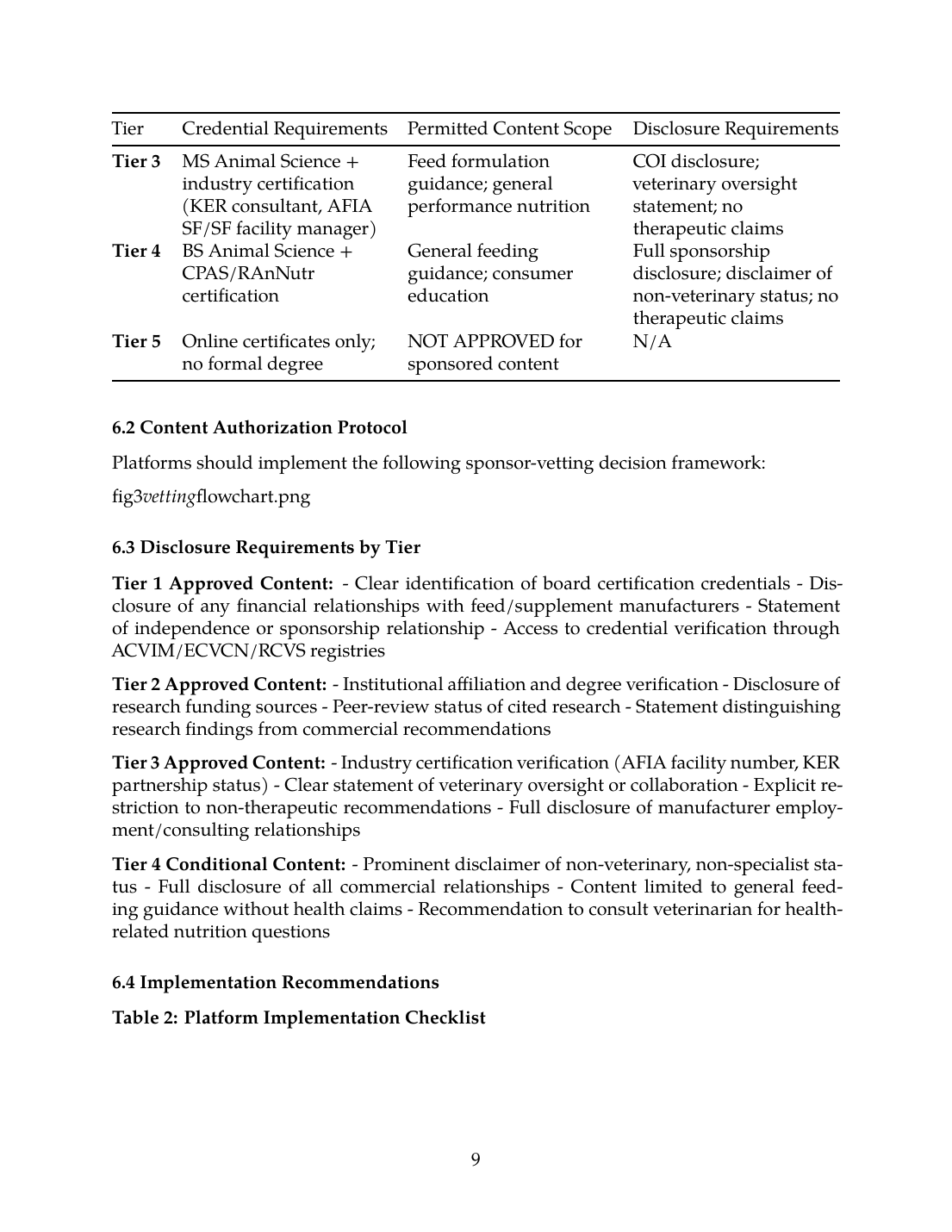
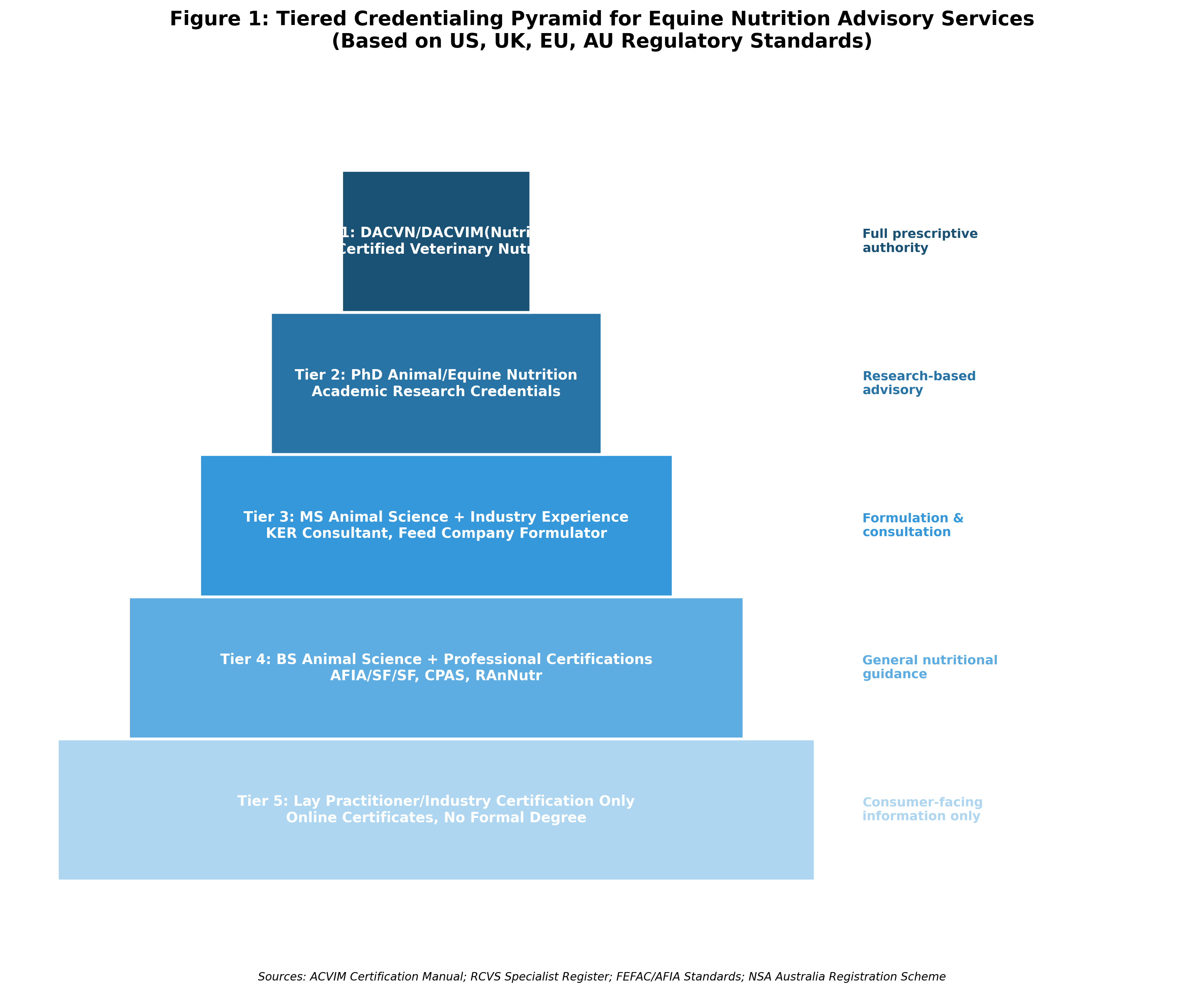
Based on the regulatory landscape analysis, the following tiered credentialing framework is recommended for equine information platforms vetting sponsors and content advisors:
Table 1: Sponsor-Vetting Tiered Credentialing Matrix
| Tier | Credential Requirements | Permitted Content Scope | Disclosure Requirements |
|---|---|---|---|
| Tier 1 | DACVIM(Nutrition), DipECVCN, RCVS Specialist in Clinical Nutrition | Full prescriptive and therapeutic content; diet formulation for diseased animals | COI disclosure for all manufacturer relationships |
| Tier 2 | PhD in Animal/Equine Nutrition from accredited institution; active research profile | Research-based advisory content; non-therapeutic recommendations | COI disclosure; peer-review verification; institutional affiliation |
| Tier 3 | MS Animal Science + industry certification (KER consultant, AFIA SF/SF facility manager) | Feed formulation guidance; general performance nutrition | COI disclosure; veterinary oversight statement; no therapeutic claims |
| Tier 4 | BS Animal Science + CPAS/RAnNutr certification | General feeding guidance; consumer education | Full sponsorship disclosure; disclaimer of non-veterinary status; no therapeutic claims |
| Tier 5 | Online certificates only; no formal degree | NOT APPROVED for sponsored content | N/A |
6.2 Content Authorization Protocol
Platforms should implement the following sponsor-vetting decision framework:
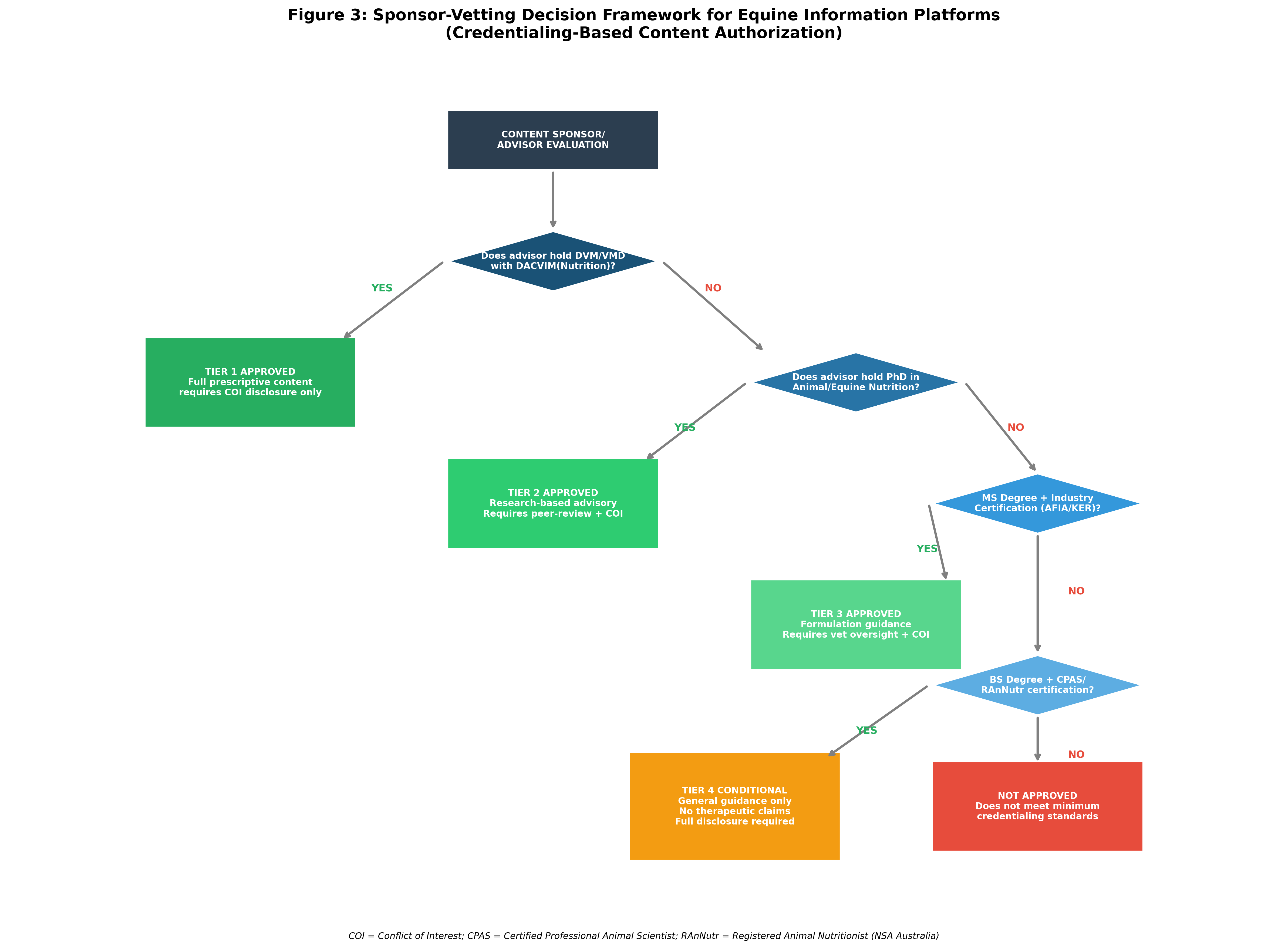
6.3 Disclosure Requirements by Tier
Tier 1 Approved Content:
- Clear identification of board certification credentials
- Disclosure of any financial relationships with feed/supplement manufacturers
- Statement of independence or sponsorship relationship
- Access to credential verification through ACVIM/ECVCN/RCVS registries
Tier 2 Approved Content:
- Institutional affiliation and degree verification
- Disclosure of research funding sources
- Peer-review status of cited research
- Statement distinguishing research findings from commercial recommendations
Tier 3 Approved Content:
- Industry certification verification (AFIA facility number, KER partnership status)
- Clear statement of veterinary oversight or collaboration
- Explicit restriction to non-therapeutic recommendations
- Full disclosure of manufacturer employment/consulting relationships
Tier 4 Conditional Content:
- Prominent disclaimer of non-veterinary, non-specialist status
- Full disclosure of all commercial relationships
- Content limited to general feeding guidance without health claims
- Recommendation to consult veterinarian for health-related nutrition questions
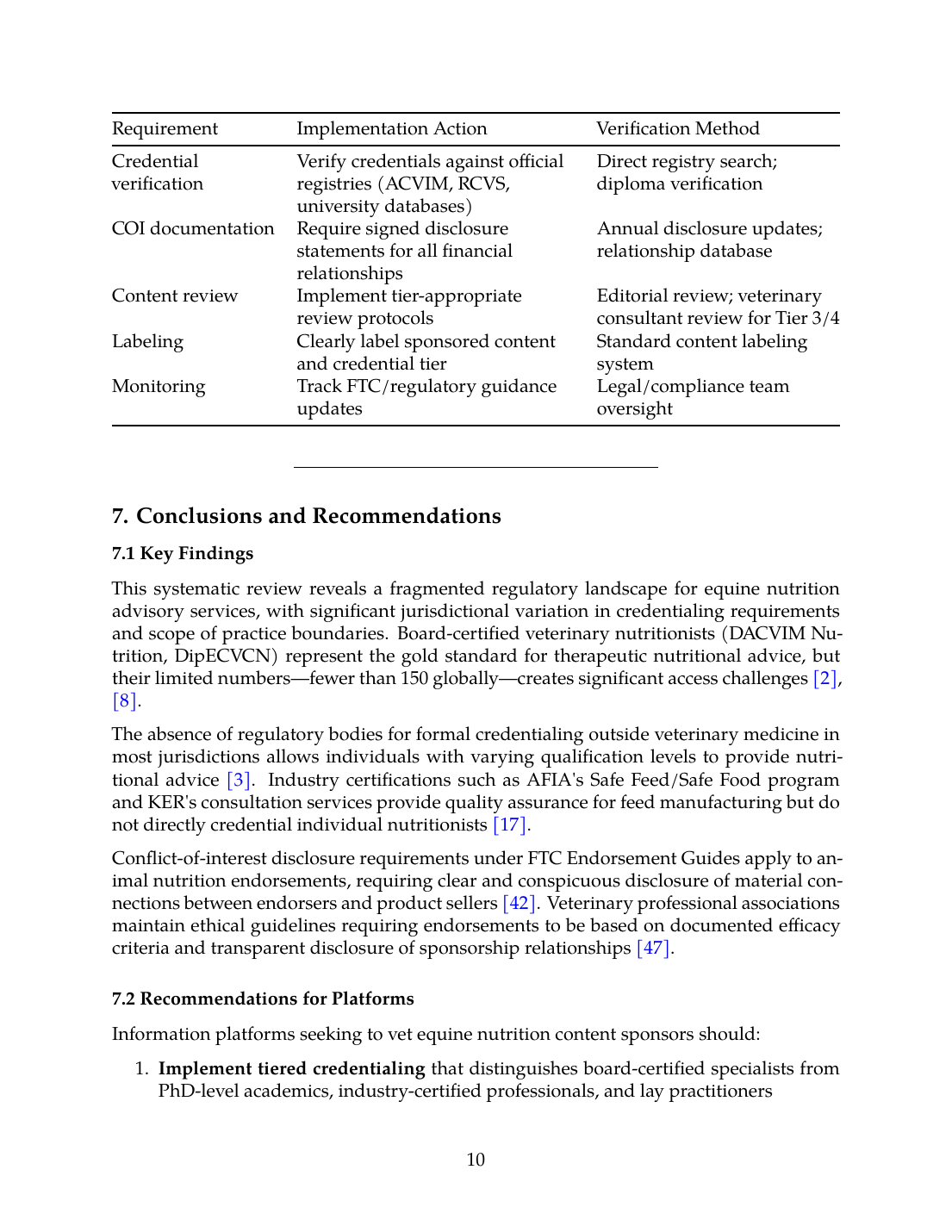
6.4 Implementation Recommendations
Table 2: Platform Implementation Checklist
| Requirement | Implementation Action | Verification Method |
|---|---|---|
| Credential verification | Verify credentials against official registries (ACVIM, RCVS, university databases) | Direct registry search; diploma verification |
| COI documentation | Require signed disclosure statements for all financial relationships | Annual disclosure updates; relationship database |
| Content review | Implement tier-appropriate review protocols | Editorial review; veterinary consultant review for Tier 3/4 |
| Labeling | Clearly label sponsored content and credential tier | Standard content labeling system |
| Monitoring | Track FTC/regulatory guidance updates | Legal/compliance team oversight |
7. Conclusions and Recommendations
7.1 Key Findings
This systematic review reveals a fragmented regulatory landscape for equine nutrition advisory services, with significant jurisdictional variation in credentialing requirements and scope of practice boundaries. Board-certified veterinary nutritionists (DACVIM Nutrition, DipECVCN) represent the gold standard for therapeutic nutritional advice, but their limited numbers—fewer than 150 globally—creates significant access challenges [2],[8].
The absence of regulatory bodies for formal credentialing outside veterinary medicine in most jurisdictions allows individuals with varying qualification levels to provide nutritional advice [3]. Industry certifications such as AFIA's Safe Feed/Safe Food program and KER's consultation services provide quality assurance for feed manufacturing but do not directly credential individual nutritionists [17].
Conflict-of-interest disclosure requirements under FTC Endorsement Guides apply to animal nutrition endorsements, requiring clear and conspicuous disclosure of material connections between endorsers and product sellers [42]. Veterinary professional associations maintain ethical guidelines requiring endorsements to be based on documented efficacy criteria and transparent disclosure of sponsorship relationships [47].
7.2 Recommendations for Platforms
Information platforms seeking to vet equine nutrition content sponsors should:
- Implement tiered credentialing that distinguishes board-certified specialists from PhD-level academics, industry-certified professionals, and lay practitioners
- Require verified credentials through official registry searches and institutional verification
- Mandate comprehensive conflict-of-interest disclosure for all sponsored content
- Restrict therapeutic content to Tier 1 credentialed individuals only
- Label content clearly with sponsor relationships and credential verification status
- Maintain compliance monitoring for evolving FTC and international regulatory requirements
7.3 Future Considerations
The equine nutrition profession would benefit from formalized credentialing mechanisms outside veterinary medicine, similar to the voluntary ruminant nutritionist licensing emerging in California [25]. Development of internationally recognized credentials for non-veterinarian equine nutritionists could enhance consumer protection while providing clear career pathways for qualified professionals. Until such frameworks exist, platforms bear significant responsibility for implementing robust sponsor-vetting protocols that protect both equine welfare and consumer trust.
References
References
Numbered in order of first citation, IEEE style. Each entry links to the original source via DOI or publisher URL.
- “Veterinary Nutrition and Dietary Counseling Services | Veterinary Authority,” internet, Mar. 2026. Available online
- L. M. Freeman, DVM, PhD, and D. (Nutrition), “What''s in a name? What is a Board Certified Veterinary Nutritionist ..,” internet, Jun. 2023. Available online
- S. A. A. B. S. Pratt-Phillips, “The Role of an Equine Nutritionist in Equine Health, Performance and Wellbeing: Ideas Stemming from an Equine Science Society Symposium Workshop,” internet, Jan. 2024. Available online
- “About the veterinary professions,” internet, Jan. 2024. Available online
- G. Urso, “2019 MODEL VETERINARY PRACTICE ACT,” internet, Unknown Year. Available online
- L. Alikhan, “https://www.acvim.org/docs/default-source/certification-documents/general-information-guide/certification-manual-2023-20249dcf68b6-486a-42a3-b489-1ab17b672ea8.pdf?sfvrsn=354f811_6,” internet, Aug. 2023. Available online
- C. Allen, “https://www.acvim.org/docs/default-source/certification-documents/general-information-guide/specialty-manual---nutrition-2024-2025f1795506-6ec1-43d8-9764-37719b41a29b.pdf?sfvrsn=15988a23_3,” internet, Apr. 2024. Available online
- “What Goes Into the Credentials? "Board-Certified Veterinary Nutritioni,” internet, Jun. 2025. Available online
- JustFoodForDogs, “What Is a Board Certified Veterinary Nutritionist? | JustFoodforDogs Blog,” internet, Dec. 2023. Available online
- “1 Veterinary Surgeon found who is a Specialist in Clinical Nutrition (Equine) - Find A Vet,” internet, Unknown Year. Available online
- S. W. Baynum, “Top Careers in the Equine Industry: Making a Living With Your Passion for Horses,” internet, Dec. 2024. Available online
- S. W. Baynum, “Top Careers in the Equine Industry: Making a Living With Your Passion for Horses | Mad Barn,” internet, Dec. 2024. Available online
- “What is an Equine Nutritionist, Exactly?,” internet, Aug. 2021. Available online
- F. S. -. 1. Business, “KER Recognizes 15 Years as Official Equine Nutritionist of the USEF,” internet, Feb. 2015. Available online
- “Kathleen Crandell, Ph.D. - Kentucky Equine Research,” internet, Dec. 2020. Available online
- “KER Academy,” internet, Unknown Year. Available online
- “https://www.afia.org/pub/?id=D3123A12-B67F-7A5D-D4FB-970B53BAEF95,” internet, Unknown Year. Available online
- “https://www.afia.org/pub/?id=7698c5ea-d1ee-8271-f0be-3bafd924e12e,” internet, Unknown Year. Available online
- Rager7, “American Feed Industry Association,” internet, Unknown Year. Available online
- “https://www.afia.org/pub/?id=D2AECD2D-C90E-2E91-5526-39B6F9B5A4E9,” internet, Unknown Year. Available online
- A. Media, “About the Registration Scheme,” internet, Unknown Year. Available online
- “https://www.revisor.mn.gov/statutes/cite/148/pdf,” internet, Unknown Year. Available online
- “Ch. 148 MN Statutes,” internet, Unknown Year. Available online
- LTC, “Nebraska Legislature,” internet, Unknown Year. Available online
- “Bill Text - AB-329 Animal nutrition.,” internet, Unknown Year. Available online
- Z. D. (BVA), “https://www.bva.co.uk/media/5999/bva-companion-animal-feeding-working-group-report.pdf,” internet, Jul. 2024. Available online
- “List of RCVS Specialists - Find A Vet,” internet, Unknown Year. Available online
- “Specialist Status | Royal College of Veterinary Surgeons,” internet, Unknown Year. Available online
- Z. D. (BVA), “https://www.bva.co.uk/media/6001/bva-position-on-rcvs-governance-july-2024.pdf,” internet, Jul. 2024. Available online
- “[PDF] BVA response to RCVS Legislation Working Party recommendations,” internet, Feb. 2021. Available online
- “https://faolex.fao.org/docs/pdf/eur89513.pdf,” internet, Unknown Year. Available online
- K. Spacilova, “https://fefac.eu/wp-content/uploads/2025/04/FF_2024_FINAL.pdf,” internet, Apr. 2025. Available online
- “[PDF] Community Code of good labelling practice for compound .. - FEFAC,” internet, Dec. 2024. Available online
- “European Feed Manufacturers’ Guide – EFMC | FEFAC,” internet, Unknown Year. Available online
- P. Office, “CL2005R0183EN0060010.0001_cp 1.1,” internet, Dec. 2021. Available online
- “Animal feed products | Australian Pesticides and Veterinary Medicines Authority,” internet, Unknown Year. Available online
- “The Importance of Equine Clinical Nutrition with Dr Jennifer Stewart BVSc BSc PhD Dip BEP — Jenquine,” internet, Unknown Year. Available online
- M. E. Services, “The Nutrition Society of Australia – Registered Animal Nutritionist @ MB Equine Services,” internet, Unknown Year. Available online
- ANZCVS, “Veterinary Practice (Equine),” internet, Sep. 2024. Available online
- “Animal Food Labeling and Pet Food Claims | FDA,” internet, Unknown Year. Available online
- sthomas, “Microsoft Word - Professional Practice Standard - Advertising July 2020 Revised Version 200717,” internet, Jul. 2020. Available online
- “16 CFR § 255.5 - Disclosure of material connections. | Electronic Code of Federal Regulations (e-CFR) | US Law | LII / Legal Information Institute,” internet, Unknown Year. Available online
- “https://www.govinfo.gov/link/cfr/16/255?link-type=pdf§ionnum=5&year=mostrecent,” internet, Unknown Year. Available online
- “FTC Warns Trade Associations and Nutrition Influencers of Lack of ..,” internet, Nov. 2023. Available online
- “Product advertising,” internet, Jan. 2025. Available online
- “A Critical Analysis of the Veracity of Television Advertising for Pet Food.,” internet, Sep. 2025. Available online
- “An Analysis of the «Veterinarian Recommended» Marketing Claim.,” internet, Sep. 2025. Available online
- kme, “[PDF] Policy on Relations with Corporate Sponsors and Vendors,” internet, Apr. 2026. Available online
- “Advertising Policy,” internet, Feb. 2023. Available online
This review is one of 34 in the Foxwatch research corpus. Methodology: PRISMA 2020-style systematic literature review against PubMed, CAB Abstracts, Scopus, Web of Science, and equine veterinary conference proceedings.