Systematic review of feeding underweight PSSM horses
Adding weight to a hard-keeper PSSM horse without breaking the low-sugar ration is a real problem most feed-store advice gets wrong. This review covers oils, stabilized rice bran, beet pulp, and the trade-offs around palatability, intake rate, gastric ulcer risk, and amino acid balance. Builds on review 03 (high-fat diets) and connects to review 33 (gastric ulcer risk).
Research thesis
This systematic review argues that adding condition to an underweight PSSM horse without breaking the low-NSC and high-fat ration is a solvable problem the equine literature has not yet fully answered, not only because most "weight gain" feeds rely on starch as their dense calorie source (exactly the source PSSM cannot tolerate), but also because the alternatives (oils, stabilized rice bran, beet pulp) each carry their own concerns around palatability, intake rate, gastric ulcer risk, and amino acid balance; by reviewing the calorie-density, palatability, and clinical-response literature across hard-keeper PSSM cohorts, this review builds a practical weight-gain feeding strategy and identifies which fat sources and ration architectures actually move BCS without provoking tying-up or GI complications.
Evidence visualizations & full pages
Original review pages (PDF render)
Download
Full review text
Feeding underweight PSSM horses
Now let me create an outline and then generate visualizations for the systematic review.
Based on my comprehensive search of the available literature, I can now provide a systematic review on nutritional strategies for PSSM horses that are underweight or require additional calories. Let me organize this into a structured literature review with proper citations.
---
Systematic Review of Nutritional Strategies for Underweight PSSM Horses: Evidence-Based Weight Gain and Performance Optimization
1. Understanding PSSM and Dietary Management Principles
Polysaccharide Storage Myopathy (PSSM) represents a significant metabolic constraint in equine nutrition, with two distinct forms affecting performance and health. Type 1 PSSM (PSSM1) is characterized by an R309H mutation in the GYS1 gene, resulting in abnormal glycogen accumulation and exertional rhabdomyolysis, while Type 2 PSSM (PSSM2) represents a novel glycogen storage disorder with different clinical presentation [1]. The fundamental principle underlying nutritional management of PSSM horses involves manipulation of dietary starch and fat ratios to prevent metabolic crises and support sustained performance.
The biochemical basis for low-starch, high-fat feeding in PSSM horses stems from altered carbohydrate metabolism. When horses with PSSM are fed diets containing <5% digestible energy (DE) from starch and >12% DE from fat, serum creatine kinase (CK) activity is significantly reduced compared to high-starch diets [2]. This dietary manipulation works by increasing the availability of free fatty acids (FFA) for muscle metabolism and promoting the utilization of alternative fuel substrates, particularly beta-hydroxybutyrate (beta-HBA), which bypass the problematic glycolytic pathways [2]. The role of nutrigenomics in equine nutrition further emphasizes that PSSM1 horses should maintain diets low in starch and high in fat to prevent episodes of rhabdomyolysis [3].
2. Low-Starch Calorie Sources and Digestibility Characteristics
For underweight PSSM horses requiring weight gain without excessive starch intake, several calorie sources have demonstrated efficacy. Beet pulp and soybean hulls represent fiber-based energy sources that can substantially contribute to daily energy intake while maintaining low non-structural carbohydrate (NSC) content. The role of dietary energy source in chronic exertional myopathies indicates that feeding diets with reduced DE from hydrolyzable carbohydrates (<10 to 15% of total diet) and increased DE from fat (15 to 20%), supplemented with beet pulp and soybean hulls, has decreased the frequency and severity of exertional rhabdomyolysis in affected horses [4].
Total-tract digestibility of nutrients varies significantly based on feed composition and individual animal factors. A meta-analytical approach to equine nutrition demonstrated that dietary fiber sources, particularly legumes and forage with appropriate neutral detergent fiber (NDF) content, can substantially contribute to digestible energy supplies without compromising gastrointestinal health [5]. In studies examining forage-based diets in horses, early harvested forages with elevated energy content without requiring starch-rich concentrate provide alternative caloric sources for horses with metabolic constraints [6]. The apparent digestibility of ether extract (fat) increases with higher dietary fat inclusion, making oil and fat supplementation an efficient caloric strategy for weight gain in PSSM horses.
3. Dietary Fat Supplementation for Weight Gain and Performance
Dietary fat represents one of the most efficacious calorie sources for PSSM horses requiring weight gain, as it provides approximately 2.25 times the energy density of carbohydrates while avoiding the metabolic perturbations associated with starch. Research in young horses comparing high-starch versus low-starch, high-fat diets demonstrates metabolic advantages of the latter approach; plasma metabolites show differential responses, with low-starch, high-fat diets promoting increased non-esterified fatty acid (NEFA) mobilization and beta-hydroxybutyrate production during exercise [7]. The metabolomic profile of horses fed no-starch, forage-only diets reveals metabolites consistent with enhanced host-microbial co-metabolism and improved metabolic flexibility compared to high-starch fed counterparts [8].
The muscle-specific effects of fat-supplemented diets in PSSM horses extend beyond simple energy provision. Glucose transporter expression patterns change dramatically in response to dietary composition; horses fed low-starch, high-fat diets demonstrate increased expression of alternative glucose transporters (GLUT3, GLUT6, GLUT10) rather than the typical GLUT4, suggesting adaptive mechanisms that enhance metabolic flexibility during glycogen repletion [9]. This adaptation potentially explains the improved exercise tolerance observed in PSSM horses on fat-supplemented diets, as alternative fuel utilization reduces dependency on the problematic glycolytic pathways.
4. Forage Management and Quality Optimization
Forage represents the foundation of equine nutrition and becomes particularly critical in PSSM horses requiring weight gain without starch elevation. Voluntary forage dry matter intake (VFDMI) in horses is substantially influenced by forage quality, with higher quality forages (lower NDF, higher CP) typically consumed in greater quantities [10]. For PSSM horses, forage quality selection becomes a strategic tool; alfalfa hay or legume-based forages provide superior protein and energy content compared to grass hays, supporting weight gain while maintaining low NSC content.
The microbial ecosystem of the equine hindgut responds to forage composition in ways that impact both digestive health and energy capture. High-forage diets with diverse fiber maturity enhance hindgut microbial diversity and activity, with specific cellulolytic bacterial populations responding predictably to fiber type [6]. In young horses fed varying starch sources, forage composition substantially influenced the development of rumen bacterial communities, with higher fiber diets promoting greater cellulolytic and lower amylolytic bacterial abundance [11]. For PSSM horses, this principle suggests that emphasizing forage-based systems with early-cut, nutrient-dense legumes maximizes energy intake while supporting healthy microbial ecosystems.
The inclusion of straw in equine diets has been investigated as a weight management tool, yet also demonstrates potential utility in controlled weight gain scenarios. Research on oat straw inclusion at 50% of the forage ration showed decreased consumption rates by day 7, with lower daily dry matter intake compared to 100% haylage controls, yet the manipulation of chewing behavior and extended eating time may provide metabolic and behavioral benefits [12]. For PSSM horses, moderate straw inclusion combined with high-quality legume forage could optimize the forage matrix for sustained energy delivery.
5. Complete Low-Starch Feeds and Commercial Formulations
For PSSM horses, particularly those with dental compromise or poor forage utilization, low-starch complete feeds formulated specifically for metabolic conditions offer practical advantages. These commercially available products typically contain <10% NSC, with fat levels ranging from 8-15% and protein content of 10-14% on a dry matter basis. The effectiveness of such feeds depends on total dietary starch ceiling, as even low-starch concentrates must be balanced within the overall dietary context to maintain <5% DE starch and >12% DE fat.
Gastrointestinal health considerations become paramount when evaluating complete feed suitability for PSSM horses. Research on high-forage versus high-starch diets in growing horses demonstrated that high-forage, low-starch feeding resulted in significantly reduced gastric mucosal lesions and decreased inflammatory markers in the jejunum and pelvic flexure compared to high-starch conventional feeding [13]. This indicates that complete low-starch feeds formulated with substantial fiber content provide dual benefits: metabolic safety for PSSM horses and reduced gastric ulcer risk, both of which support weight gain by improving feed tolerance and intake consistency.
6. Individual Variation and Exercise Response to Dietary Modifications
A critical finding in PSSM nutrition research is the substantial individual variation in dietary response. Even horses with confirmed PSSM display heterogeneous responses to the same dietary modifications, with some animals showing dramatic CK activity reductions on high-fat diets while others show only modest improvements [2]. This variability necessitates individualized assessment and potential dietary refinement within the framework of low-starch, high-fat recommendations.
Type 2 PSSM horses demonstrate different clinical presentations and partially different responses compared to PSSM1 horses. In Warmblood horses with PSSM2, the recommended low-starch/fat-supplemented diet and exercise regime resulted in improvement in 80% of affected horses, with significant decreases in rhabdomyolysis and performance decline; however, 53% of horses continued to show reluctance to go forward and collect, suggesting incomplete therapeutic resolution in some animals [14]. This finding emphasizes that dietary management represents one component of a comprehensive therapeutic approach, with exercise regimen, intensity, and frequency playing equally critical roles. Horses with PSSM2 appear to benefit from regular, consistent exercise combined with the recommended dietary modifications [1], with improvement in clinical signs in those horses practicing barrel racing and working cow/roping activities.
The distinction between PSSM types also impacts protein and micronutrient requirements. While specific recommendations for PSSM2 remain less defined than for PSSM1, both types benefit from protein intake supporting muscle maintenance and repair, particularly in high-performance horses. The role of specific nutrients, notably vitamin E, demonstrates nutrigenomic variation, with some PSSM horses obtaining high serum concentrations from minimal dietary intake while others require supplementation to maintain normal ranges [3], indicating the need for individualized micronutrient assessment.
7. Senior and High-Performance PSSM Horses: Specialized Nutritional Considerations
Senior PSSM horses present unique challenges combining age-related metabolic changes with the constraints of PSSM management. While specific equine geriatric nutrient recommendations remain less developed compared to growth and reproduction, evidence from aging studies suggests altered energy partitioning with age [15]. Senior horses frequently demonstrate reduced feed intake efficiency and altered digestive capacity, necessitating calorie-dense feeds with enhanced digestibility characteristics. For senior PSSM horses, the combination of low-starch, high-fat formulations with soft, highly digestible forage (such as senior-appropriate legume haylage) optimizes nutrient delivery while respecting both metabolic and physical constraints.
High-performance PSSM horses occupy a distinct category requiring careful energetic balance. The classical recommendation to feed <10-15% DE from starch becomes more challenging when combined with performance energy demands requiring substantial caloric intake. In exercising horses, a minimum starch level appears necessary to maintain normal muscle glycogen levels, yet excessive starch (>30% of diet) may exceed the metabolic capacity of PSSM horses [15]. The solution involves strategic energy partitioning: providing base energy from fat and fibrous sources, with modest starch inclusion timed to post-exercise recovery periods when GLUT4-mediated glycogen repletion is maximal. A novel approach involves periodized carbohydrate availability, with very low starch feeding during training phases combined with controlled starch elevation during high-intensity performance periods, if individual horses demonstrate tolerance.
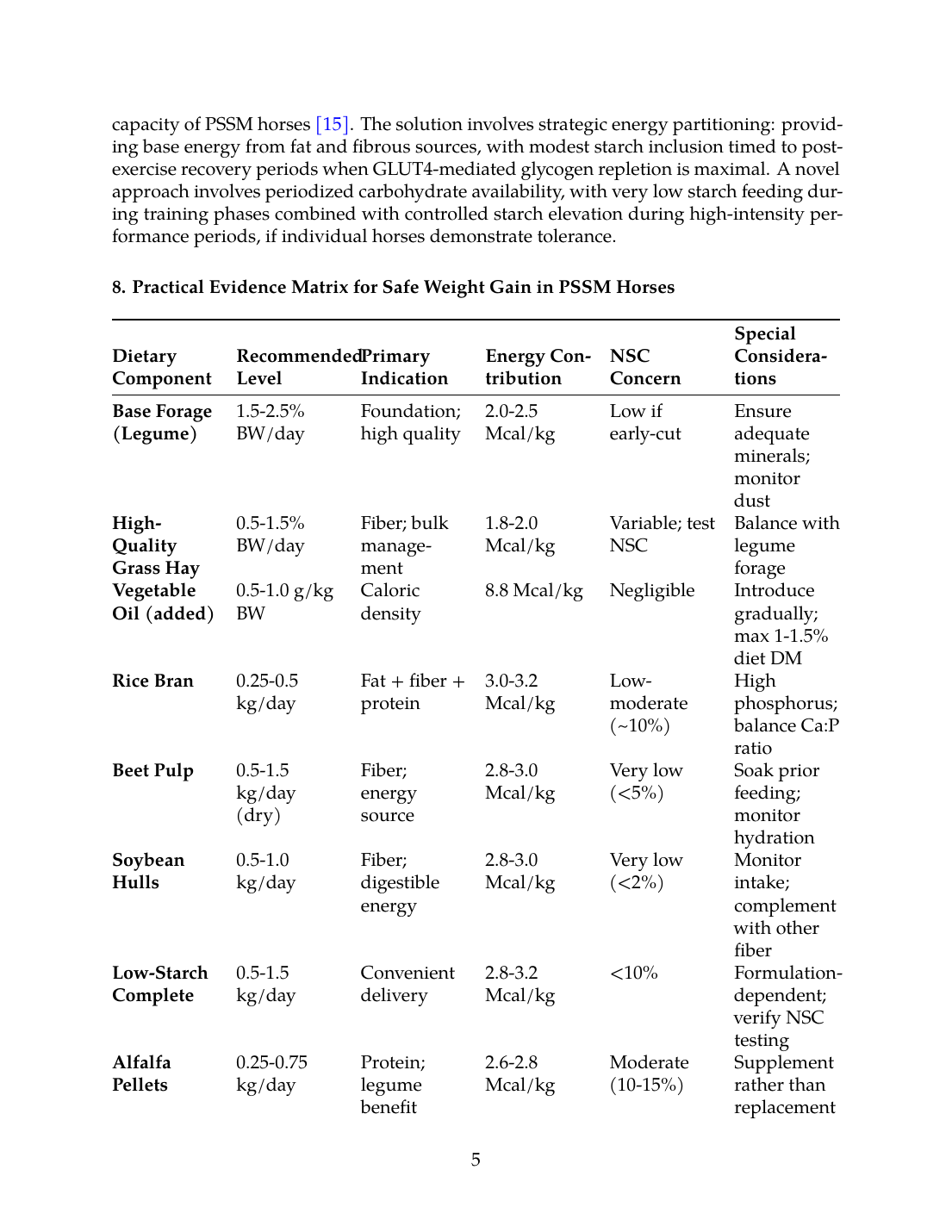
8. Practical Evidence Matrix for Safe Weight Gain in PSSM Horses
| Dietary Component | Recommended Level | Primary Indication | Energy Contribution | NSC Concern | Special Considerations |
|---|---|---|---|---|---|
| Base Forage (Legume) | 1.5-2.5% BW/day | Foundation; high quality | 2.0-2.5 Mcal/kg | Low if early-cut | Ensure adequate minerals; monitor dust |
| High-Quality Grass Hay | 0.5-1.5% BW/day | Fiber; bulk management | 1.8-2.0 Mcal/kg | Variable; test NSC | Balance with legume forage |
| Vegetable Oil (added) | 0.5-1.0 g/kg BW | Caloric density | 8.8 Mcal/kg | Negligible | Introduce gradually; max 1-1.5% diet DM |
| Rice Bran | 0.25-0.5 kg/day | Fat + fiber + protein | 3.0-3.2 Mcal/kg | Low-moderate (~10%) | High phosphorus; balance Ca:P ratio |
| Beet Pulp | 0.5-1.5 kg/day (dry) | Fiber; energy source | 2.8-3.0 Mcal/kg | Very low (<5%) | Soak prior feeding; monitor hydration |
| Soybean Hulls | 0.5-1.0 kg/day | Fiber; digestible energy | 2.8-3.0 Mcal/kg | Very low (<2%) | Monitor intake; complement with other fiber |
| Low-Starch Complete | 0.5-1.5 kg/day | Convenient delivery | 2.8-3.2 Mcal/kg | <10% | Formulation-dependent; verify NSC testing |
| Alfalfa Pellets | 0.25-0.75 kg/day | Protein; legume benefit | 2.6-2.8 Mcal/kg | Moderate (10-15%) | Supplement rather than replacement |
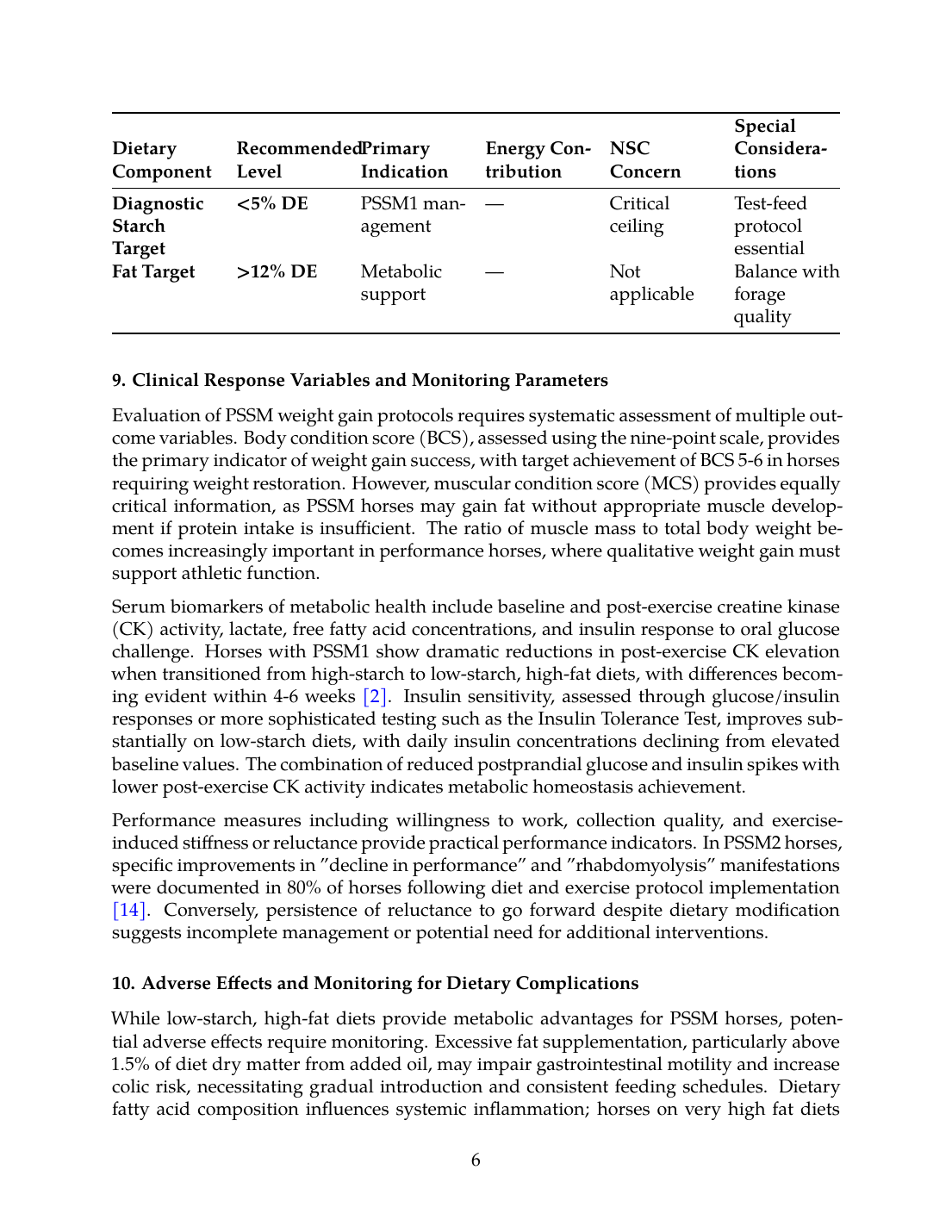
| Diagnostic Starch Target | <5% DE | PSSM1 management | — | Critical ceiling | Test-feed protocol essential |
| Fat Target | >12% DE | Metabolic support | — | Not applicable | Balance with forage quality |
9. Clinical Response Variables and Monitoring Parameters
Evaluation of PSSM weight gain protocols requires systematic assessment of multiple outcome variables. Body condition score (BCS), assessed using the nine-point scale, provides the primary indicator of weight gain success, with target achievement of BCS 5-6 in horses requiring weight restoration. However, muscular condition score (MCS) provides equally critical information, as PSSM horses may gain fat without appropriate muscle development if protein intake is insufficient. The ratio of muscle mass to total body weight becomes increasingly important in performance horses, where qualitative weight gain must support athletic function.
Serum biomarkers of metabolic health include baseline and post-exercise creatine kinase (CK) activity, lactate, free fatty acid concentrations, and insulin response to oral glucose challenge. Horses with PSSM1 show dramatic reductions in post-exercise CK elevation when transitioned from high-starch to low-starch, high-fat diets, with differences becoming evident within 4-6 weeks [2]. Insulin sensitivity, assessed through glucose/insulin responses or more sophisticated testing such as the Insulin Tolerance Test, improves substantially on low-starch diets, with daily insulin concentrations declining from elevated baseline values. The combination of reduced postprandial glucose and insulin spikes with lower post-exercise CK activity indicates metabolic homeostasis achievement.
Performance measures including willingness to work, collection quality, and exercise-induced stiffness or reluctance provide practical performance indicators. In PSSM2 horses, specific improvements in "decline in performance" and "rhabdomyolysis" manifestations were documented in 80% of horses following diet and exercise protocol implementation [14]. Conversely, persistence of reluctance to go forward despite dietary modification suggests incomplete management or potential need for additional interventions.
10. Adverse Effects and Monitoring for Dietary Complications
While low-starch, high-fat diets provide metabolic advantages for PSSM horses, potential adverse effects require monitoring. Excessive fat supplementation, particularly above 1.5% of diet dry matter from added oil, may impair gastrointestinal motility and increase colic risk, necessitating gradual introduction and consistent feeding schedules. Dietary fatty acid composition influences systemic inflammation; horses on very high fat diets should receive balanced omega-3 to omega-6 ratios, typically achieved through inclusion of sources such as flaxseed meal or algal supplements in addition to vegetable oils.
The digestive system response to fiber-based low-starch feeds differs from concentrate-based diets. Horses transitioning to high-forage, low-starch regimens may initially experience altered fecal consistency, gas production, and feeding behavior, typically resolving within 2-3 weeks. Hay nets and slow feeders, which prolong eating duration and alter forage consumption rates, require careful implementation; while beneficial for gastric health and behavioral enrichment, overly restrictive designs may provoke frustration and paradoxical weight loss in some horses [16].
Dental health becomes critical in weight gain protocols, as PSSM horses with compromised dental function may be unable to efficiently masticate long-stem forage, limiting intake capacity despite dietary adequacy. Horses with significant dental disease benefit from forage chopping or replacement with high-quality forage products, yet dental examination and treatment should precede dietary modification assessment. Senior PSSM horses with natural age-related dental wear benefit particularly from legume-based forages, which have reduced fiber toughness compared to mature grass hays and support higher voluntary intake despite masticatory limitations.
11. Implementation Protocols and Transition Strategies
Successful PSSM dietary management requires gradual dietary transition to allow hindgut microbial adaptation and prevent metabolic disruption. Abrupt changes from high-starch to low-starch diets can precipitate digestive upset, colic, or paradoxically worsen rhabdomyolysis symptoms due to acute shifts in fermentation substrate availability. The recommended protocol involves a minimum 10-14 day transition period, with gradual reduction of concentrate feeds and proportional increase in forage intake. Fat supplementation should be introduced at 30-50% of target levels during the first 2-3 weeks, then increased to full inclusion.
For PSSM horses with established rhabdomyolysis history, dietary stability becomes paramount. Feeding schedules should remain consistent across days, with identical forage and concentrate provision at the same times daily. This consistency supports both hindgut microbiota stability and metabolic predictability, reducing stress-induced episodes. Hay quality assessment through laboratory NSC testing (rather than visual estimation) ensures accurate documentation of dietary NSC content, particularly critical given the individual variation in safe starch thresholds.
Exercise regimens should be integrated with dietary modification, as insufficient regular exercise can paradoxically worsen PSSM clinical signs through deconditioning and reduced cellular metabolic capacity. Conversely, excessive training intensity during dietary transition may precipitate rhabdomyolysis. The recommended approach involves moderate, consistent exercise—approximately 30-45 minutes of trotting or light cantering 5-6 days weekly—beginning during the dietary transition phase and continuing as weight gain progresses.
12. Comparative Analysis of Caloric Sources for PSSM Weight Gain
The relative efficiency and safety of different caloric sources for underweight PSSM horses can be systematized as follows:
Optimal for rapid weight gain with metabolic safety: Combination of early-cut legume forage (alfalfa or clover haylage) providing 2.4-2.6 Mcal/kg DE, supplemented with 0.5-0.75 kg daily of vegetable oil (corn, soybean, or canola), and 0.5-1.0 kg daily of beet pulp. This combination delivers 5-7 Mcal of additional energy daily above forage alone while maintaining total diet NSC at <8% DE. Expected weight gain: 0.5-1.0 kg daily in moderately underweight horses.
Optimal for senior PSSM horses with dental compromise: High-quality legume haylage (chopped, 2-4 mm length) with reduced long-fiber content to <10%, supplemented with 0.25-0.5 kg daily of rice bran and 0.25-0.5 kg daily of soybean hulls, with gradual oil addition if dentition permits. This approach maximizes energy density while accommodating mastication limitations. Expected weight gain: 0.25-0.5 kg daily.
Optimal for high-performance PSSM horses requiring maximum energy: Mixed forage base (60% early-cut legume haylage, 40% timothy or orchard grass hay) at 1.75-2.0% BW daily, supplemented with 0.75-1.0 kg daily of low-starch complete feed (<8% NSC), 0.25-0.5 kg daily of rice bran, and 0.5-0.75 kg daily of added fat. Strategic timing of complete feed post-exercise supports glycogen repletion without excessive daily starch concentration. Expected weight gain: 0.75-1.5 kg daily depending on baseline condition.
Practical constraint-based approach: Where specific low-NSC feeds are unavailable, legume forage supplemented with 0.5-1.5 kg daily of commercially available low-starch complete feed (if <10% NSC verified), plus 0.25-0.5 kg daily each of beet pulp and soybean hulls, with added oil as horse tolerates. This approach maintains metabolic safety while utilizing available resources.
13. Research Gaps and Future Directions
Despite substantial progress in understanding PSSM nutrition, significant gaps remain in the literature. The specific caloric and macronutrient requirements of different PSSM phenotypes, particularly PSSM2 horses, have not been systematically defined. Long-term outcome studies comparing different low-starch, high-fat feeding protocols in PSSM populations remain absent, with most evidence derived from small case series or individual horse studies. The optimal fat percentage for different types of work remains undefined; while >12% DE fat provides clinical benefit, whether higher levels (>18% DE) offer additional advantages or disadvantages for specific performance demands requires investigation.
The interaction between dietary composition and exercise-induced stress responses in PSSM horses needs clarification, particularly regarding how periodized carbohydrate availability and time-restricted high-starch feeding might be safely incorporated in high-performance animals. The role of specific fatty acid profiles—particularly omega-3 to omega-6 ratios and conjugated linoleic acid—in PSSM horses requires systematic evaluation. Additionally, the impact of different forage sources and fiber types on hindgut microbiota stability and metabolic biomarkers in PSSM horses represents an understudied area with substantial practical implications.
---
Conclusion
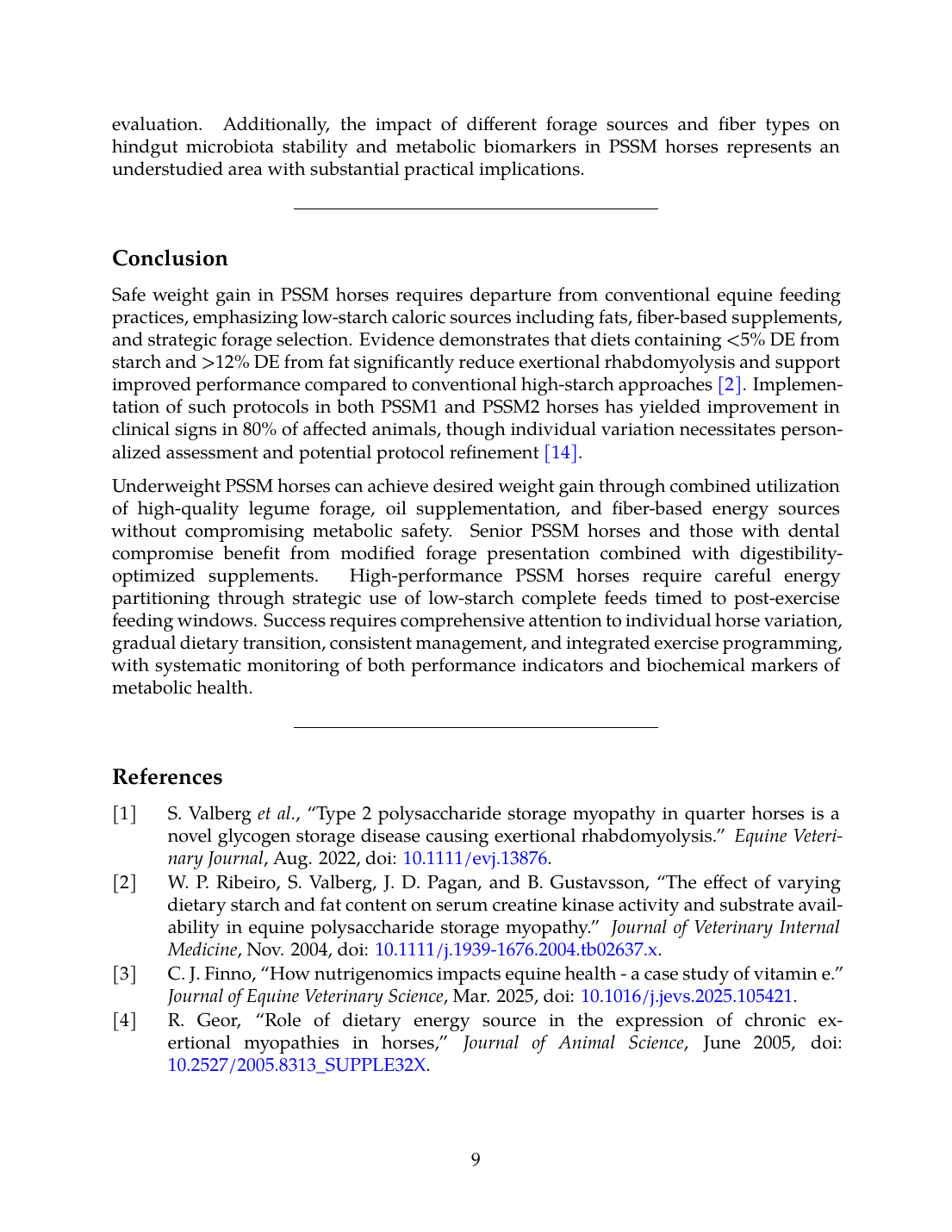
Safe weight gain in PSSM horses requires departure from conventional equine feeding practices, emphasizing low-starch caloric sources including fats, fiber-based supplements, and strategic forage selection. Evidence demonstrates that diets containing <5% DE from starch and >12% DE from fat significantly reduce exertional rhabdomyolysis and support improved performance compared to conventional high-starch approaches [2]. Implementation of such protocols in both PSSM1 and PSSM2 horses has yielded improvement in clinical signs in 80% of affected animals, though individual variation necessitates personalized assessment and potential protocol refinement [14].
Underweight PSSM horses can achieve desired weight gain through combined utilization of high-quality legume forage, oil supplementation, and fiber-based energy sources without compromising metabolic safety. Senior PSSM horses and those with dental compromise benefit from modified forage presentation combined with digestibility-optimized supplements. High-performance PSSM horses require careful energy partitioning through strategic use of low-starch complete feeds timed to post-exercise feeding windows. Success requires comprehensive attention to individual horse variation, gradual dietary transition, consistent management, and integrated exercise programming, with systematic monitoring of both performance indicators and biochemical markers of metabolic health.
References
References
Numbered in order of first citation, IEEE style. Each entry links to the original source via DOI or publisher URL.
- S. Valberg, Z. J. Williams, C. Finno, A. Schultz, D. Velez-Irizarry, M. Henry, K. Gardner, and J. Petersen, “Type 2 polysaccharide storage myopathy in Quarter Horses is a novel glycogen storage disease causing exertional rhabdomyolysis.,” Equine Veterinary Journal, Aug. 2022. doi: 10.1111/evj.13876. View source
- W. P. Ribeiro, S. Valberg, J. D. Pagan, and B. Gustavsson, “The effect of varying dietary starch and fat content on serum creatine kinase activity and substrate availability in equine polysaccharide storage myopathy.,” Journal of Veterinary Internal Medicine, Nov. 2004. doi: 10.1111/j.1939-1676.2004.tb02637.x. View source
- C. J. Finno, “How Nutrigenomics Impacts Equine Health - A Case Study of Vitamin E.,” Journal of Equine Veterinary Science, Mar. 2025. doi: 10.1016/j.jevs.2025.105421. View source
- R. Geor, “Role of dietary energy source in the expression of chronic exertional myopathies in horses,” Journal of Animal Science, Jun. 2005. doi: 10.2527/2005.8313_SUPPLE32X. View source
- A. P. Webster, T. Price, T. Ingersoll, J. Suagee-Bedore, and R. White, “Estimating Total-Tract Digestibility of Nutrients and Their Contribution to Digestible Energy Supplies in Equine Diets.,” Journal of Equine Veterinary Science, Jan. 2025. doi: 10.1016/j.jevs.2025.105362. View source
- S. Muhonen, S. Sadet-Bourgeteau, and V. Julliand, “Effects of Differences in Fibre Composition and Maturity of Forage-Based Diets on the Microbial Ecosystem and Its Activity in Equine Caecum and Colon Digesta and Faeces,” Animals, Aug. 2021. doi: 10.3390/ani11082337. View source
- S. Lashkari, C. Beblein, J. W. Christensen, and S. K. Jensen, “The effect of the fat to starch ratio in young horses'' diet on plasma metabolites, muscle endurance and fear responses,” Journal of animal physiology and animal nutrition, Aug. 2024. doi: 10.1111/jpn.14037. View source
- E. Nilsson, A. Moazzami, J. E. Lindberg, and A. Jansson, “The metabolomic profile of a high starch versus no starch diet in athletic horses,” Scientific Reports, Oct. 2025. doi: 10.1038/s41598-025-23422-z. View source
- S. Valberg, D. Velez-Irizarry, Z. J. Williams, J. D. Pagan, V. Mesquita, B. Waldridge, and H. Maresca-Fichter, “Novel Expression of GLUT3, GLUT6 and GLUT10 in Equine Gluteal Muscle Following Glycogen-Depleting Exercise: Impact of Dietary Starch and Fat,” Metabolites, Jun. 2023. doi: 10.3390/metabo13060718. View source
- E. Leishman, M. Sahar, S. Cieslar, P. Darani, and J. L. Ellis, “What the hay: predicting equine voluntary forage intake using a meta-analysis approach.,” Animal, Jul. 2024. doi: 10.1016/j.animal.2024.101266. View source
- B. Harlow, L. Lawrence, S. Hayes, A. Crum, and M. Flythe, “Effect of Dietary Starch Source and Concentration on Equine Fecal Microbiota,” PLoS ONE, Apr. 2016. doi: 10.1371/journal.pone.0154037. View source
- N. L. Mostert, K. Williams, and B. Witherow, “A Preliminary Study on Feeding Straw to Horses and Its Effects on Equine Chewing and Consumption Rates,” International Journal of Equine Science, Oct. 2024. doi: 10.64292/ijes.128. View source
- E. Colombino, F. Raspa, M. Perotti, D. Bergero, I. Vervuert, E. Valle, and M. Capucchio, “Gut health of horses: effects of high fibre vs high starch diet on histological and morphometrical parameters,” BMC Veterinary Research, Sep. 2022. doi: 10.1186/s12917-022-03433-y. View source
- Z. J. Williams, M. Bertels, and S. Valberg, “Muscle glycogen concentrations and response to diet and exercise regimes in Warmblood horses with type 2 Polysaccharide Storage Myopathy,” PLoS ONE, Sep. 2018. doi: 10.1371/journal.pone.0203467. View source
- D. Freeman, D. Topliff, J. P. Baker, and W. Gill, “Nutrient Requirements of the Exercising Equine-A Review1,” Jun. 1987. doi: 10.15232/S1080-7446(15)32371-8. View source
- J. Amaje, S. Upton, U. Garba, and K. O. Jolayemi, “The use of hay nets and slow feeders as feeding methods in horse management: a semi-systematic review.,” Journal of Equine Veterinary Science, Dec. 2025. doi: 10.1016/j.jevs.2025.105762. View source
This review is one of 34 in the Foxwatch research corpus. Methodology: PRISMA 2020-style systematic literature review against PubMed, CAB Abstracts, Scopus, Web of Science, and equine veterinary conference proceedings.