Feed Composition Database (CHARTABLE)
Brand-by-brand commercial feed composition turned into something owners can actually compare. NSC, fat, protein, fiber, and price across the major US, UK, EU, and Australian manufacturers, with each product sorted into a PSSM-suitability tier. The data source for filterable feed comparison tools on this site. Pairs with review 02 (sugar threshold) and review 18 (commercial feed claim audit).
Research thesis
This database review argues that brand-by-brand commercial equine feed composition becomes a usable evidence resource for PSSM management once it is structured, audited against guaranteed analyses, and tied to peer-reviewed NSC, fat, protein, and fiber benchmarks, not only because the same "low-starch" or "metabolic" labeling is applied across products with very different macronutrient profiles, but also because price-per-kilogram and per-megacalorie comparison reveals cost-effectiveness differences owners cannot infer from the feed tag alone; by compiling guaranteed analyses, ingredient lists, NSC values, fat percentages, protein quality, and price across the major US, UK, EU, and Australian manufacturers, this review builds a filterable feed-comparison resource and classifies each product by PSSM-suitability tier.
Evidence visualizations & full pages
Evidence figures (4)
Figures referenced by the review's Figure N: captions. Click any chart for a full-size view. They are also rendered inline below their respective captions in the full review text further down.

Original review pages (PDF render)
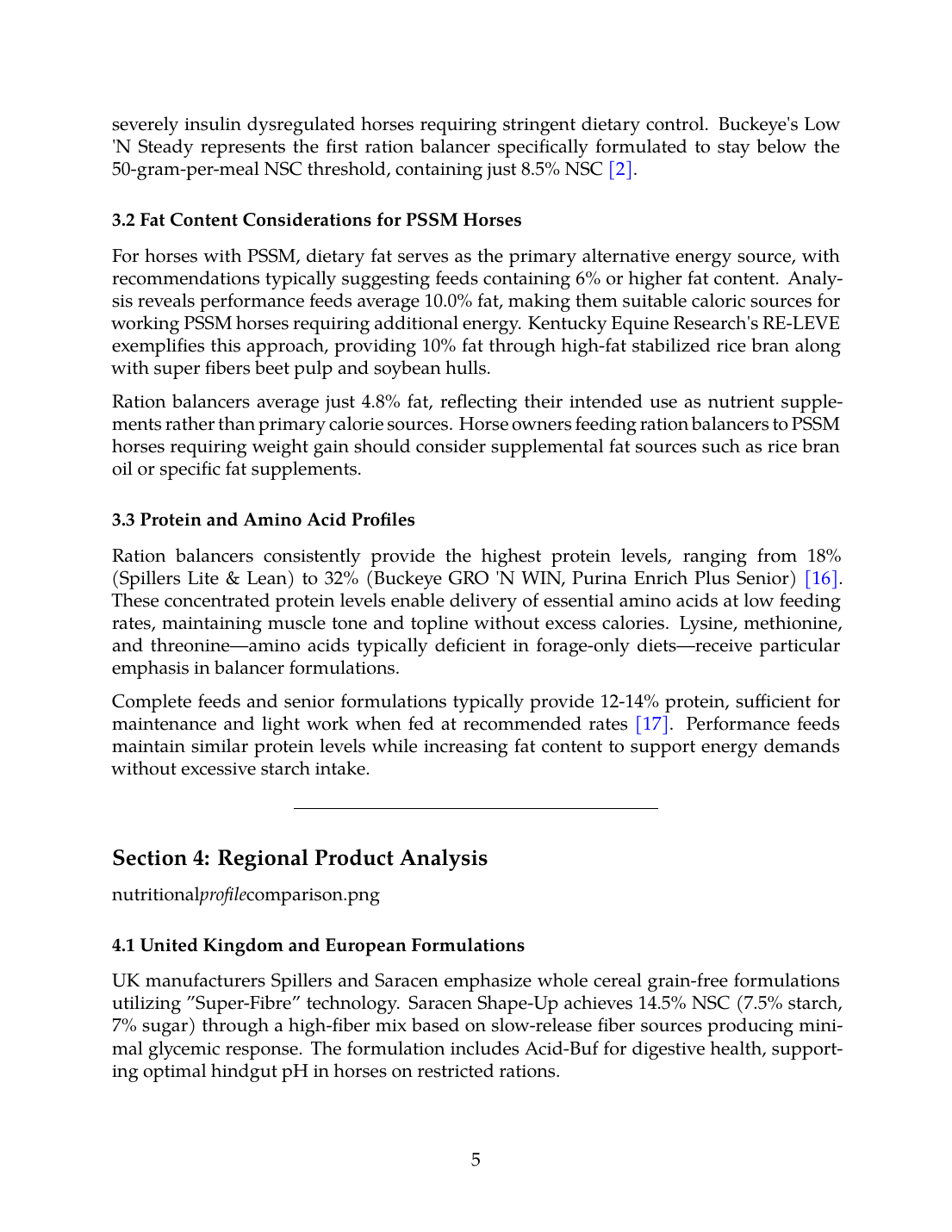
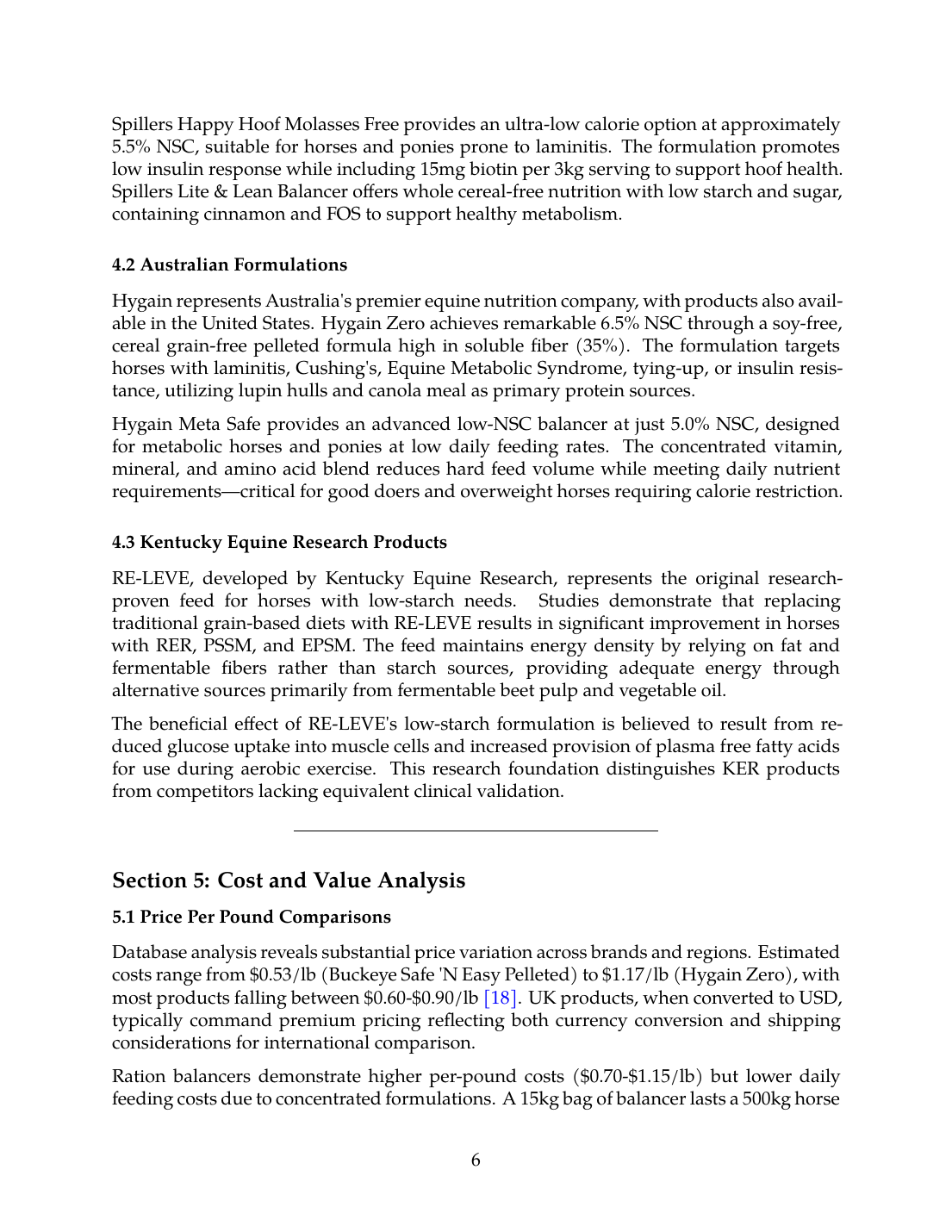
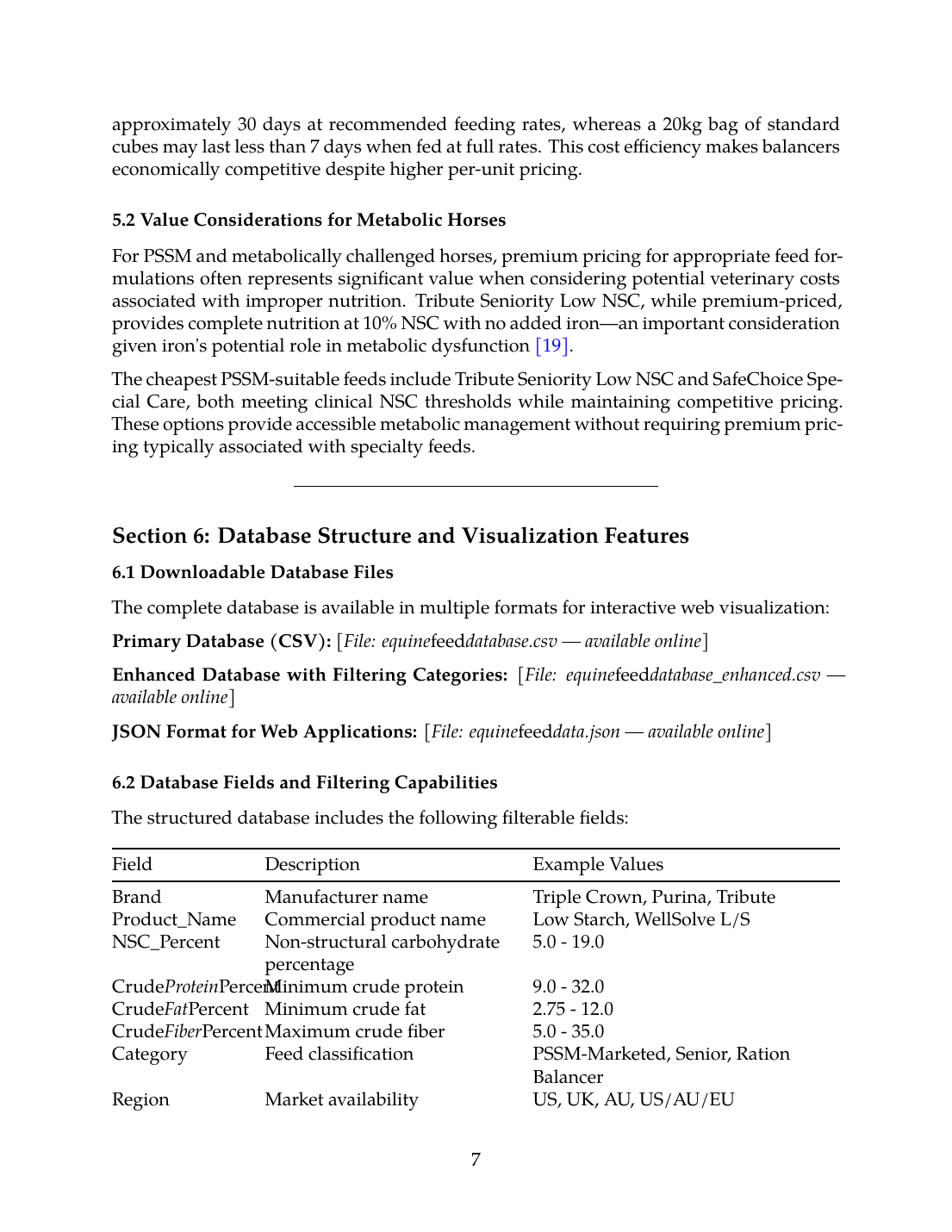
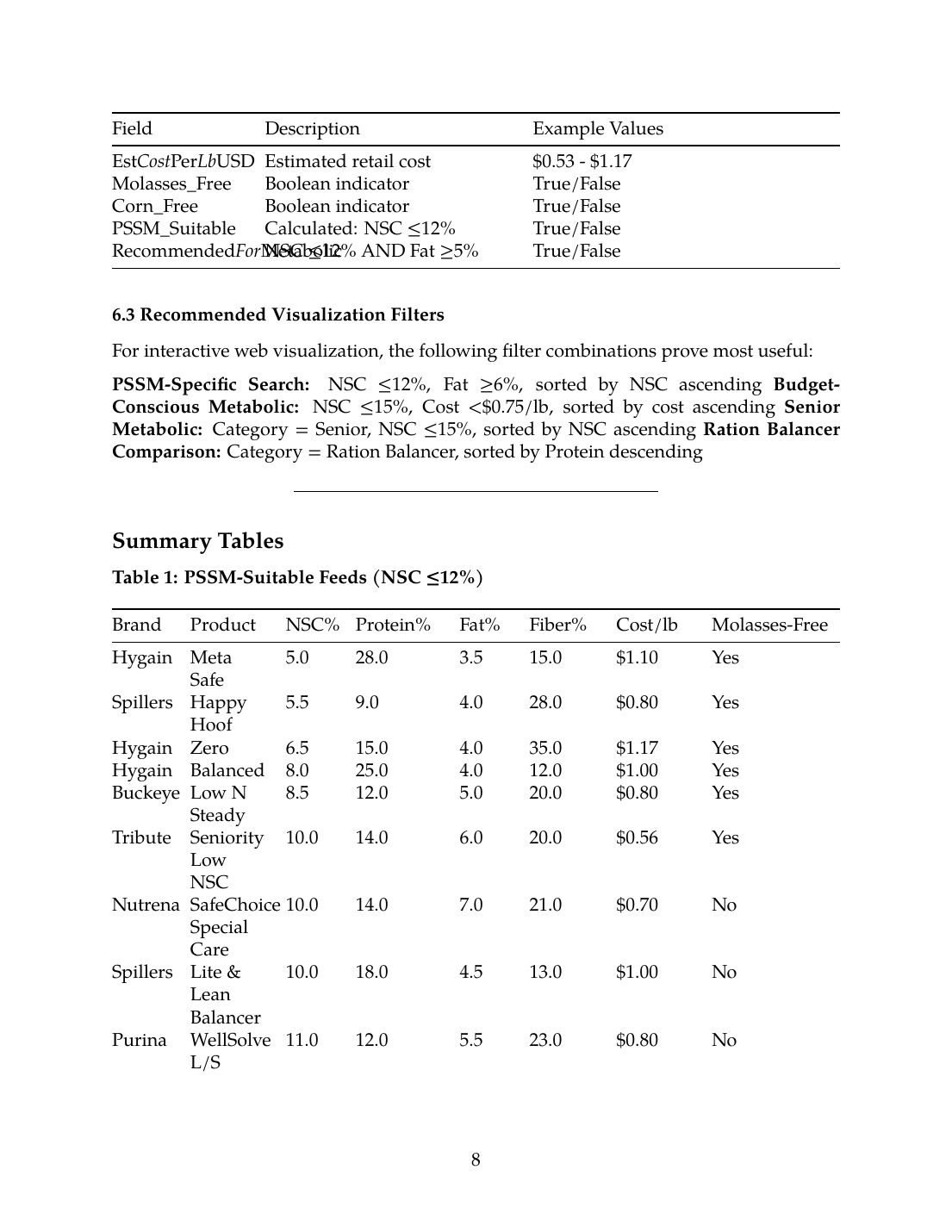
Download
Interactive feed comparison tool
The dataset above powers a filterable, sortable comparison tool. Filter by sugar-and-starch ceiling, fat, protein, price, brand, category, or region. Four presets cover the most common search patterns (PSSM-specific, budget metabolic, senior metabolic, ration balancers).
Full review text
Feed Composition Database (CHARTABLE)
Commercial Equine Feed Composition Database: A Comprehensive Analysis for PSSM and Metabolic Horse Management
Executive Summary
This comprehensive database compiles guaranteed analyses, nutritional profiles, and cost data from ten major commercial equine feed manufacturers across the United States, United Kingdom, European Union, and Australia. The database includes 39 feed products categorized by metabolic suitability, enabling horse owners and veterinary professionals to make evidence-based feed selections for horses with polysaccharide storage myopathy (PSSM), insulin resistance, equine metabolic syndrome (EMS), and other carbohydrate-sensitive conditions.
Database Overview
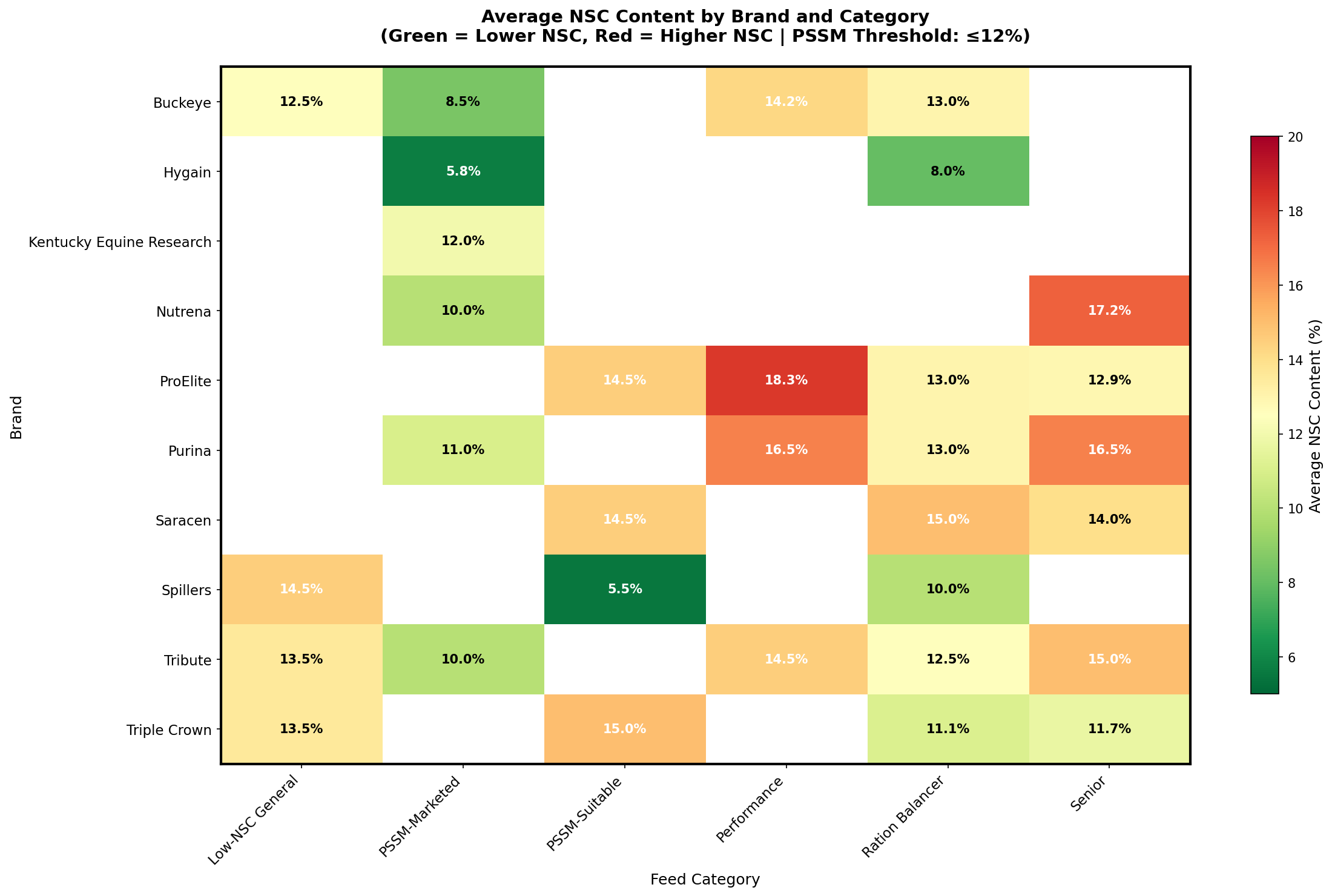
The database covers products from Triple Crown, Purina, Tribute, ProElite, Buckeye, Nutrena, Kentucky Equine Research, Hygain, Spillers, and Saracen, representing the major players in both North American and UK/EU equine feed markets [1]. Products are categorized as PSSM-marketed, PSSM-suitable, low-NSC general, senior, performance, or ration balancer feeds based on their guaranteed analyses and manufacturer positioning.
---
Section 1: Understanding NSC Thresholds and Metabolic Considerations
1.1 Clinical Significance of Non-Structural Carbohydrates
Non-structural carbohydrates (NSC), comprising starch and simple sugars, represent the primary dietary concern for horses with metabolic disorders. Recent research conducted by the University of Kentucky, the Waltham Petcare Science Institute, and Mars Horsecare/BUCKEYE Nutrition has established that severely insulin dysregulated horses should consume no more than 0.1g of NSC per kilogram of body weight per meal [2]. For a 1,100-pound (500 kg) horse, this translates to a maximum of 50 grams of NSC per meal. Exceeding this threshold significantly increases the likelihood of elevated insulin levels and associated complications including laminitis.
When designing feeding programs for horses with PSSM, nutritionists recommend limiting energy sources containing high starch ingredients such as sweet feed, corn, wheat, oats, and barley [3]. High-fat concentrates serve as the preferred alternative energy source for horses in work. The combined NSC content from hay and hard feed should ideally remain below 20% of the total diet to minimize glycemic response and support stable glucose metabolism.
1.2 Feed Category Definitions and Selection Criteria
The database employs six distinct categories based on manufacturer positioning and guaranteed analyses. Feeds designated as "PSSM-Marketed" are those explicitly promoted by manufacturers for horses with polysaccharide storage myopathy or metabolic conditions. Products like Tribute Seniority Low NSC represent this category with an ultra-low 10% NSC and explicit marketing for insulin resistance and PSSM Type 1 [4]. The "PSSM-Suitable" designation applies to feeds meeting clinical criteria (≤12% NSC, adequate fat) even without specific metabolic marketing claims.
Ration balancers constitute a unique category providing concentrated vitamins, minerals, and amino acids at low feeding rates. Triple Crown 30% Ration Balancer and Tribute Essential K both fall under this classification, with NSC values of 11.1% and 12.5% respectively—both meeting the critical threshold for metabolic horses [1]. The distinction between these categories proves essential for owners navigating product selection, as a ration balancer with slightly higher NSC but lower daily feeding rate may deliver fewer total grams of NSC than a "low-starch" complete feed fed at standard rates.
1.3 Regional Variations in Feed Formulation
Significant regional differences exist in feed formulation approaches. UK and European manufacturers like Spillers and Saracen typically emphasize "Super-Fibre" technology utilizing ingredients such as oatfeed, wheatfeed, and unmolassed beet pulp. These formulations often achieve lower NSC values through high-fiber, grain-free approaches. Australian manufacturer Hygain has developed what they term "Ultra-Low Starch" formulations, with Hygain Zero achieving just 6.5% NSC through a soy-free, cereal grain-free pelleted design.
North American manufacturers including Purina, Nutrena, and Buckeye more commonly utilize wheat middlings, soybean hulls, and rice bran as primary fiber and energy sources [5]. These regional differences reflect both ingredient availability and traditional feeding practices, though nutritional outcomes remain comparable when products are evaluated by guaranteed analysis rather than ingredient list alone.
---
Section 2: Brand-by-Brand Analysis
2.1 Triple Crown Feeds (United States)
Triple Crown has established a strong reputation among metabolic horse owners with their comprehensive low-starch lineup. Triple Crown Low Starch provides 15% estimated NSC through a grain, alfalfa, and molasses-free formulation ideal for horses with insulin resistance, HYPP, PPID, EPSM, or PSSM [6]. The formula contains 13% protein, 6% fat, and 18% fiber, with rice bran and flaxseed providing essential fatty acids while maintaining low starch levels.
Triple Crown Senior represents one of the few true low-NSC senior feeds at just 11.7% NSC, significantly lower than most competing senior products [7]. The formulation supports aging horses requiring metabolic management while providing adequate calories for weight maintenance. The company's 30% Ration Balancer offers concentrated nutrition at 11.1% NSC with high probiotic levels (18.68 billion CFU/lb), considerably exceeding the probiotic content found in competing products [1].
2.2 Tribute Nutrition (United States/Canada)
Tribute Nutrition offers perhaps the most comprehensive metabolic-focused product line. Tribute Seniority Low NSC achieves an ultra-low 10% NSC while functioning as a complete feed suitable for horses of all ages with sugar and starch sensitivities [8]. This corn, oat, and molasses-free formulation serves horses with insulin resistance, PSSM Type 1, and other metabolic disorders. The high fiber content enables use as a total hay replacement when necessary, making it particularly valuable for horses unable to consume traditional forage.
Essential K, Tribute's ration balancer, maintains a 12.5% NSC level—only marginally higher than Triple Crown's offering [1]. Both products are manufactured in ionophore-free facilities, a critical consideration for horse owners concerned about feed contamination. Tribute EZ, available in Canada, provides a higher fat (8%), high fiber (20%) option at 13.5% NSC for moderate to harder-keeping horses with metabolic sensitivities [9].
2.3 Purina Mills (United States)
Purina WellSolve L/S represents the company's flagship metabolic feed, developed through extensive research at the Purina Animal Nutrition Center [10]. With a guaranteed maximum 11% NSC (7% starch, 4% sugar), the feed addresses equine carbohydrate metabolism through carefully balanced fiber types, vitamin and mineral profiles, and essential fatty acids. The formulation specifically targets horses prone to metabolic issues including colic, founder, ulcers, and Cushing's disease [5].
Purina Equine Senior, while highly popular, carries a notably higher NSC content at 19% [11]. This positions it outside the metabolically appropriate range for PSSM horses, though it remains suitable for otherwise healthy senior horses. Purina Strategy Healthy Edge offers a moderate option at 16.5% NSC, providing controlled starch and sugar with higher fat and fiber for horses in various life stages. Enrich Plus Senior ration balancer maintains just 13% NSC with controlled starch and sugar appropriate for aging horses with carbohydrate sensitivities [12].
2.4 Nutrena/SafeChoice (United States)
The SafeChoice line provides controlled starch options ranging from 10% NSC in SafeChoice Special Care to 25% in SafeChoice Maintenance [13]. This intentional variation allows selection based on individual horse needs and metabolic status. SafeChoice Special Care specifically targets horses with metabolic concerns and easy keepers through its low controlled starch formula with 14% protein, 7% fat, and 21% maximum fiber.
SafeChoice Senior provides 14% protein and 8% fat with controlled starch designed for horses over fifteen years [14]. The molasses-free version reduces sugar content compared to standard formulations, achieving approximately 16.5% NSC. Both senior formulations include Digestive Shield technology and Nutri-Bloom Advantage for enhanced fiber digestion [15].
---
Section 3: Nutritional Profile Comparisons
3.1 NSC Distribution Analysis
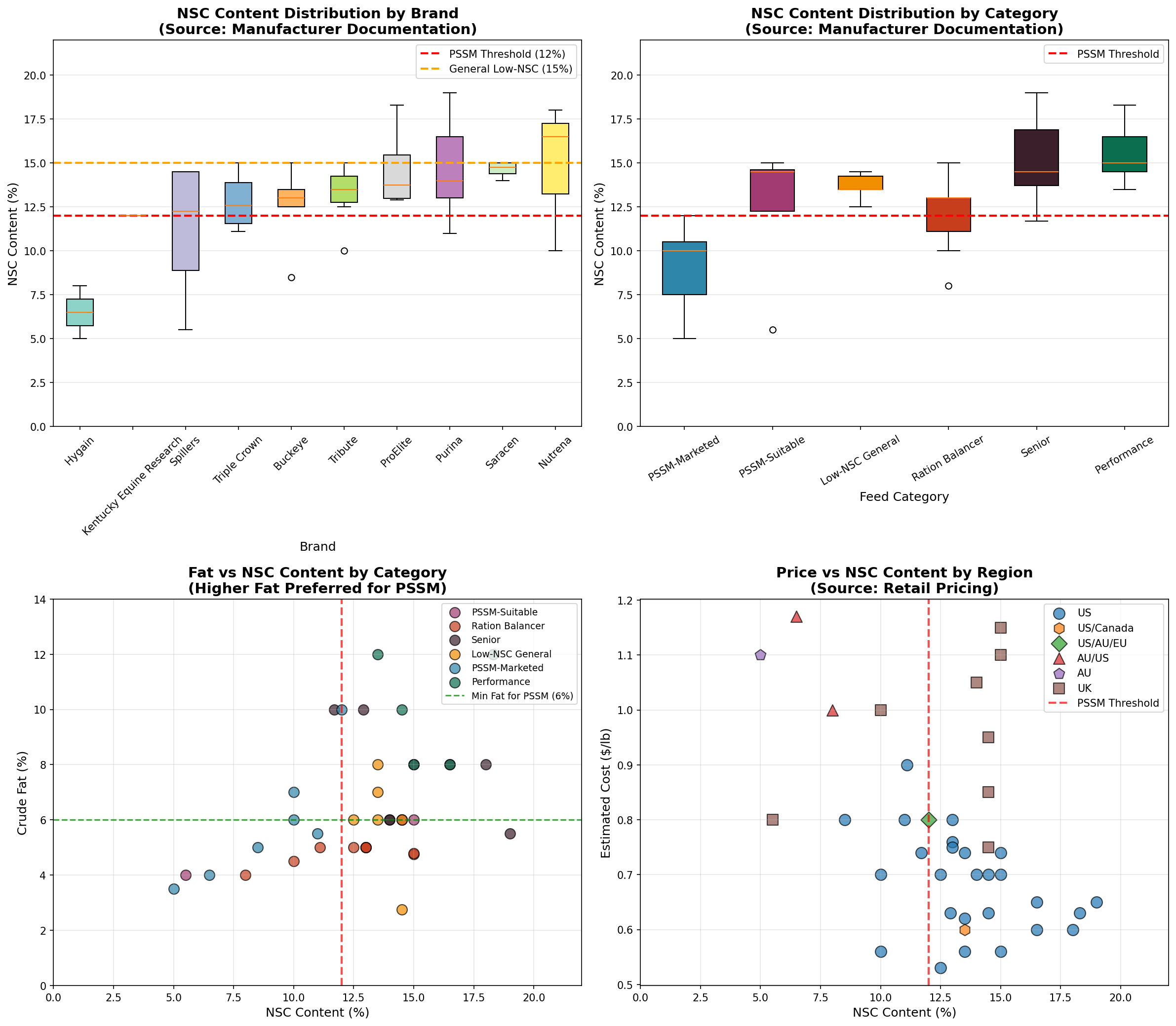
Analysis of the 39-product database reveals significant variation in NSC content both within and across feed categories. PSSM-marketed feeds demonstrate a mean NSC of 9.0% with values ranging from 5.0% to 12.0% [2]. Ration balancers show greater variability with a mean of 12.3% NSC, reflecting their diverse intended applications from weight management to performance support.
The lowest NSC products in the database include Hygain Meta Safe at 5.0%, Spillers Happy Hoof at 5.5%, and Hygain Zero at 6.5%. These ultra-low formulations target severely insulin dysregulated horses requiring stringent dietary control. Buckeye's Low 'N Steady represents the first ration balancer specifically formulated to stay below the 50-gram-per-meal NSC threshold, containing just 8.5% NSC [2].
3.2 Fat Content Considerations for PSSM Horses
For horses with PSSM, dietary fat serves as the primary alternative energy source, with recommendations typically suggesting feeds containing 6% or higher fat content. Analysis reveals performance feeds average 10.0% fat, making them suitable caloric sources for working PSSM horses requiring additional energy. Kentucky Equine Research's RE-LEVE exemplifies this approach, providing 10% fat through high-fat stabilized rice bran along with super fibers beet pulp and soybean hulls.
Ration balancers average just 4.8% fat, reflecting their intended use as nutrient supplements rather than primary calorie sources. Horse owners feeding ration balancers to PSSM horses requiring weight gain should consider supplemental fat sources such as rice bran oil or specific fat supplements.
3.3 Protein and Amino Acid Profiles
Ration balancers consistently provide the highest protein levels, ranging from 18% (Spillers Lite & Lean) to 32% (Buckeye GRO 'N WIN, Purina Enrich Plus Senior) [16]. These concentrated protein levels enable delivery of essential amino acids at low feeding rates, maintaining muscle tone and topline without excess calories. Lysine, methionine, and threonine—amino acids typically deficient in forage-only diets—receive particular emphasis in balancer formulations.
Complete feeds and senior formulations typically provide 12-14% protein, sufficient for maintenance and light work when fed at recommended rates [17]. Performance feeds maintain similar protein levels while increasing fat content to support energy demands without excessive starch intake.
---
Section 4: Regional Product Analysis
4.1 United Kingdom and European Formulations
UK manufacturers Spillers and Saracen emphasize whole cereal grain-free formulations utilizing "Super-Fibre" technology. Saracen Shape-Up achieves 14.5% NSC (7.5% starch, 7% sugar) through a high-fiber mix based on slow-release fiber sources producing minimal glycemic response. The formulation includes Acid-Buf for digestive health, supporting optimal hindgut pH in horses on restricted rations.
Spillers Happy Hoof Molasses Free provides an ultra-low calorie option at approximately 5.5% NSC, suitable for horses and ponies prone to laminitis. The formulation promotes low insulin response while including 15mg biotin per 3kg serving to support hoof health. Spillers Lite & Lean Balancer offers whole cereal-free nutrition with low starch and sugar, containing cinnamon and FOS to support healthy metabolism.
4.2 Australian Formulations
Hygain represents Australia's premier equine nutrition company, with products also available in the United States. Hygain Zero achieves remarkable 6.5% NSC through a soy-free, cereal grain-free pelleted formula high in soluble fiber (35%). The formulation targets horses with laminitis, Cushing's, Equine Metabolic Syndrome, tying-up, or insulin resistance, utilizing lupin hulls and canola meal as primary protein sources.
Hygain Meta Safe provides an advanced low-NSC balancer at just 5.0% NSC, designed for metabolic horses and ponies at low daily feeding rates. The concentrated vitamin, mineral, and amino acid blend reduces hard feed volume while meeting daily nutrient requirements—critical for good doers and overweight horses requiring calorie restriction.
4.3 Kentucky Equine Research Products
RE-LEVE, developed by Kentucky Equine Research, represents the original research-proven feed for horses with low-starch needs. Studies demonstrate that replacing traditional grain-based diets with RE-LEVE results in significant improvement in horses with RER, PSSM, and EPSM. The feed maintains energy density by relying on fat and fermentable fibers rather than starch sources, providing adequate energy through alternative sources primarily from fermentable beet pulp and vegetable oil.
The beneficial effect of RE-LEVE's low-starch formulation is believed to result from reduced glucose uptake into muscle cells and increased provision of plasma free fatty acids for use during aerobic exercise. This research foundation distinguishes KER products from competitors lacking equivalent clinical validation.
---
Section 5: Cost and Value Analysis
5.1 Price Per Pound Comparisons
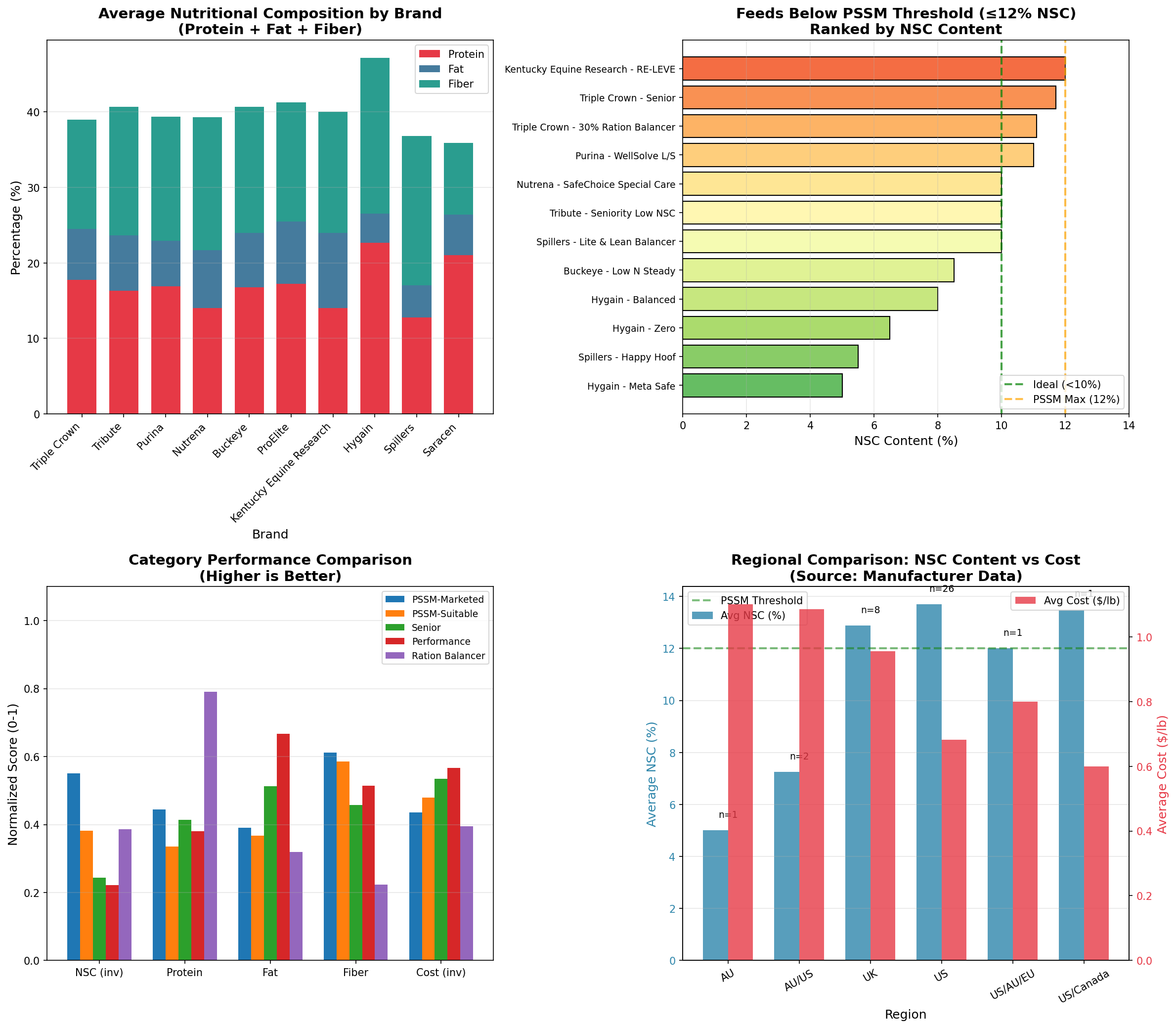
Database analysis reveals substantial price variation across brands and regions. Estimated costs range from $0.53/lb (Buckeye Safe 'N Easy Pelleted) to $1.17/lb (Hygain Zero), with most products falling between $0.60-$0.90/lb [18]. UK products, when converted to USD, typically command premium pricing reflecting both currency conversion and shipping considerations for international comparison.
Ration balancers demonstrate higher per-pound costs ($0.70-$1.15/lb) but lower daily feeding costs due to concentrated formulations. A 15kg bag of balancer lasts a 500kg horse approximately 30 days at recommended feeding rates, whereas a 20kg bag of standard cubes may last less than 7 days when fed at full rates. This cost efficiency makes balancers economically competitive despite higher per-unit pricing.
5.2 Value Considerations for Metabolic Horses
For PSSM and metabolically challenged horses, premium pricing for appropriate feed formulations often represents significant value when considering potential veterinary costs associated with improper nutrition. Tribute Seniority Low NSC, while premium-priced, provides complete nutrition at 10% NSC with no added iron—an important consideration given iron's potential role in metabolic dysfunction [19].
The cheapest PSSM-suitable feeds include Tribute Seniority Low NSC and SafeChoice Special Care, both meeting clinical NSC thresholds while maintaining competitive pricing. These options provide accessible metabolic management without requiring premium pricing typically associated with specialty feeds.
---
Section 6: Database Structure and Visualization Features
6.1 Downloadable Database Files
The complete database is available in multiple formats for interactive web visualization:
Primary Database (CSV): [File: equine_feed_database.csv — available online]
Enhanced Database with Filtering Categories: [File: equine_feed_database_enhanced.csv — available online]
JSON Format for Web Applications: [File: equine_feed_data.json — available online]
6.2 Database Fields and Filtering Capabilities
The structured database includes the following filterable fields:
| Field | Description | Example Values |
|---|---|---|
| Brand | Manufacturer name | Triple Crown, Purina, Tribute |
| Product_Name | Commercial product name | Low Starch, WellSolve L/S |
| NSC_Percent | Non-structural carbohydrate percentage | 5.0 - 19.0 |
| Crude_Protein_Percent | Minimum crude protein | 9.0 - 32.0 |
| Crude_Fat_Percent | Minimum crude fat | 2.75 - 12.0 |
| Crude_Fiber_Percent | Maximum crude fiber | 5.0 - 35.0 |
| Category | Feed classification | PSSM-Marketed, Senior, Ration Balancer |
| Region | Market availability | US, UK, AU, US/AU/EU |
| Est_Cost_Per_Lb_USD | Estimated retail cost | $0.53 - $1.17 |
| Molasses_Free | Boolean indicator | True/False |
| Corn_Free | Boolean indicator | True/False |
| PSSM_Suitable | Calculated: NSC ≤12% | True/False |
| Recommended_For_Metabolic | NSC ≤12% AND Fat ≥5% | True/False |
6.3 Recommended Visualization Filters
For interactive web visualization, the following filter combinations prove most useful:
PSSM-Specific Search: NSC ≤12%, Fat ≥6%, sorted by NSC ascending
Budget-Conscious Metabolic: NSC ≤15%, Cost <$0.75/lb, sorted by cost ascending
Senior Metabolic: Category = Senior, NSC ≤15%, sorted by NSC ascending
Ration Balancer Comparison: Category = Ration Balancer, sorted by Protein descending
---
Summary Tables
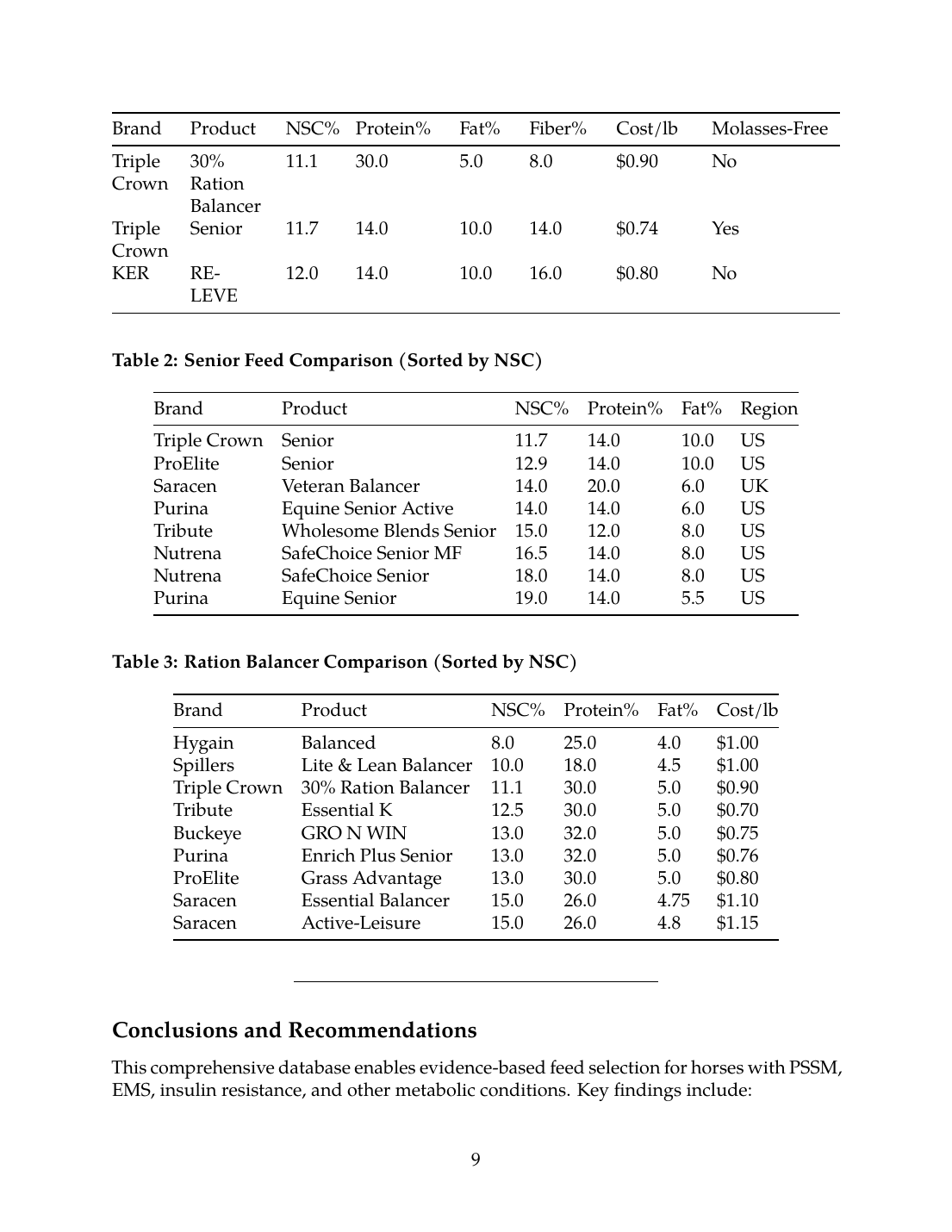
Table 1: PSSM-Suitable Feeds (NSC ≤12%)
| Brand | Product | NSC% | Protein% | Fat% | Fiber% | Cost/lb | Molasses-Free |
|---|---|---|---|---|---|---|---|
| Hygain | Meta Safe | 5.0 | 28.0 | 3.5 | 15.0 | $1.10 | Yes |
| Spillers | Happy Hoof | 5.5 | 9.0 | 4.0 | 28.0 | $0.80 | Yes |
| Hygain | Zero | 6.5 | 15.0 | 4.0 | 35.0 | $1.17 | Yes |
| Hygain | Balanced | 8.0 | 25.0 | 4.0 | 12.0 | $1.00 | Yes |
| Buckeye | Low N Steady | 8.5 | 12.0 | 5.0 | 20.0 | $0.80 | Yes |
| Tribute | Seniority Low NSC | 10.0 | 14.0 | 6.0 | 20.0 | $0.56 | Yes |
| Nutrena | SafeChoice Special Care | 10.0 | 14.0 | 7.0 | 21.0 | $0.70 | No |
| Spillers | Lite & Lean Balancer | 10.0 | 18.0 | 4.5 | 13.0 | $1.00 | No |
| Purina | WellSolve L/S | 11.0 | 12.0 | 5.5 | 23.0 | $0.80 | No |
| Triple Crown | 30% Ration Balancer | 11.1 | 30.0 | 5.0 | 8.0 | $0.90 | No |
| Triple Crown | Senior | 11.7 | 14.0 | 10.0 | 14.0 | $0.74 | Yes |
| KER | RE-LEVE | 12.0 | 14.0 | 10.0 | 16.0 | $0.80 | No |
Table 2: Senior Feed Comparison (Sorted by NSC)
| Brand | Product | NSC% | Protein% | Fat% | Region |
|---|---|---|---|---|---|
| Triple Crown | Senior | 11.7 | 14.0 | 10.0 | US |
| ProElite | Senior | 12.9 | 14.0 | 10.0 | US |
| Saracen | Veteran Balancer | 14.0 | 20.0 | 6.0 | UK |
| Purina | Equine Senior Active | 14.0 | 14.0 | 6.0 | US |
| Tribute | Wholesome Blends Senior | 15.0 | 12.0 | 8.0 | US |
| Nutrena | SafeChoice Senior MF | 16.5 | 14.0 | 8.0 | US |
| Nutrena | SafeChoice Senior | 18.0 | 14.0 | 8.0 | US |
| Purina | Equine Senior | 19.0 | 14.0 | 5.5 | US |
Table 3: Ration Balancer Comparison (Sorted by NSC)
| Brand | Product | NSC% | Protein% | Fat% | Cost/lb |
|---|---|---|---|---|---|
| Hygain | Balanced | 8.0 | 25.0 | 4.0 | $1.00 |
| Spillers | Lite & Lean Balancer | 10.0 | 18.0 | 4.5 | $1.00 |
| Triple Crown | 30% Ration Balancer | 11.1 | 30.0 | 5.0 | $0.90 |
| Tribute | Essential K | 12.5 | 30.0 | 5.0 | $0.70 |
| Buckeye | GRO N WIN | 13.0 | 32.0 | 5.0 | $0.75 |
| Purina | Enrich Plus Senior | 13.0 | 32.0 | 5.0 | $0.76 |
| ProElite | Grass Advantage | 13.0 | 30.0 | 5.0 | $0.80 |
| Saracen | Essential Balancer | 15.0 | 26.0 | 4.75 | $1.10 |
| Saracen | Active-Leisure | 15.0 | 26.0 | 4.8 | $1.15 |
Conclusions and Recommendations
This comprehensive database enables evidence-based feed selection for horses with PSSM, EMS, insulin resistance, and other metabolic conditions. Key findings include:
- Twelve products meet strict PSSM criteria (≤12% NSC), ranging from Hygain Meta Safe at 5.0% to KER RE-LEVE at 12.0% [4].
- Regional differences in formulation approach do not necessarily correlate with NSC outcomes—both UK/AU high-fiber formulations and US soy/beet-based products achieve comparable metabolic suitability.
- Senior feeds vary dramatically in metabolic appropriateness, with Triple Crown Senior (11.7% NSC) representing the only widely-available true low-NSC senior complete feed [7].
- Ration balancers provide cost-effective metabolic management due to low daily feeding rates, though fat supplementation may be necessary for horses requiring additional calories [1].
- Price does not correlate with NSC content—budget-conscious options like Tribute Seniority Low NSC ($0.56/lb) match or exceed premium products in metabolic suitability [19].
The downloadable CSV and JSON files enable integration with web-based visualization tools for interactive filtering by NSC threshold, fat content, price, brand, and regional availability, supporting personalized feed selection based on individual horse requirements and management constraints.
References
References
Numbered in order of first citation, IEEE style. Each entry links to the original source via DOI or publisher URL.
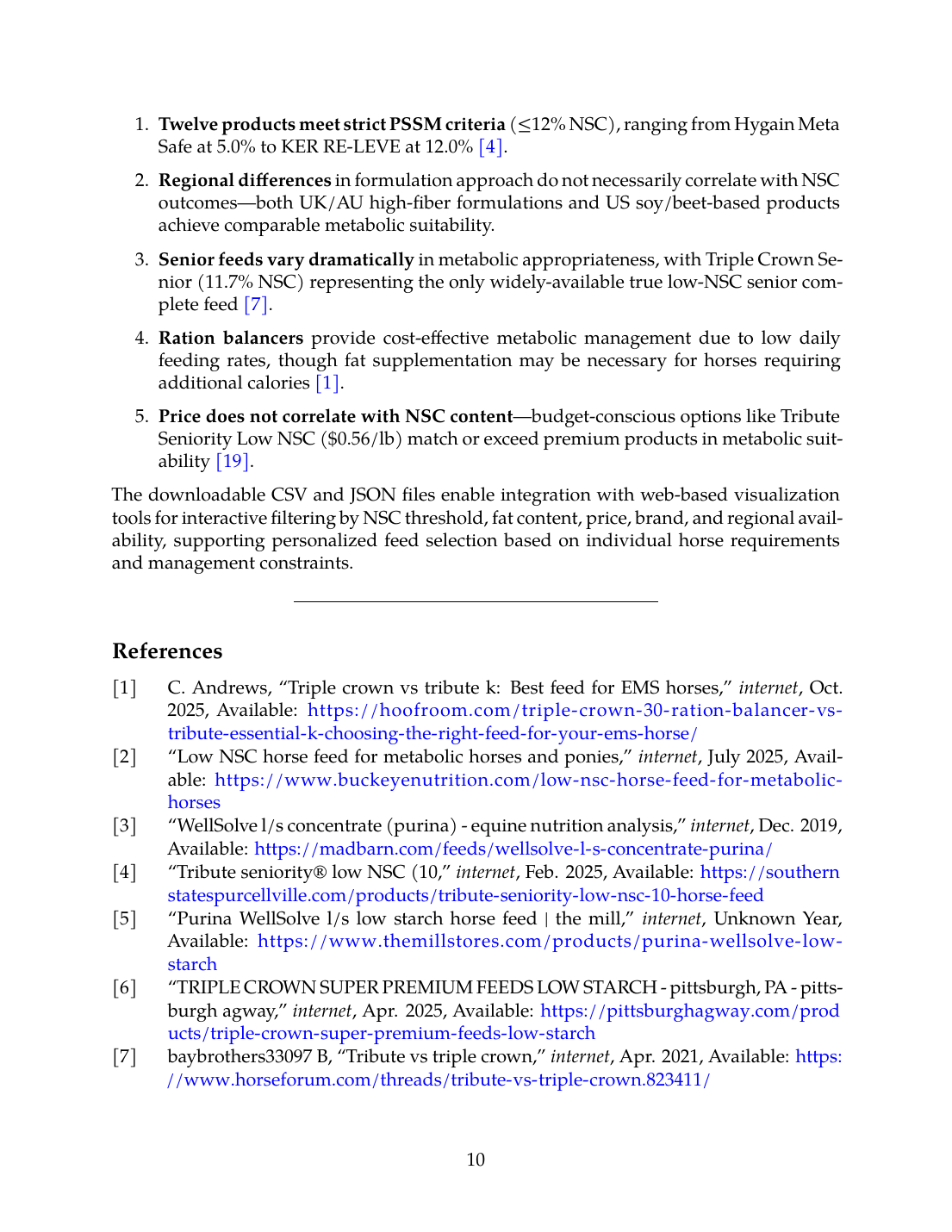
- C. Andrews, “Triple Crown vs Tribute K: Best Feed for EMS Horses,” internet, Oct. 2025. Available online
- “Low NSC Horse Feed for Metabolic Horses and Ponies,” internet, Jul. 2025. Available online
- “WellSolve L/S Concentrate (Purina) - Equine Nutrition Analysis,” internet, Dec. 2019. Available online
- “Tribute Seniority® Low NSC (10%) Horse Feed - Purcellville, VA - Southern States Purcellville,” internet, Feb. 2025. Available online
- “Purina WellSolve L/S Low Starch Horse Feed | The Mill,” internet, Unknown Year. Available online
- “TRIPLE CROWN SUPER PREMIUM FEEDS LOW STARCH - Pittsburgh, PA - Pittsburgh Agway,” internet, Apr. 2025. Available online
- B. B, “Tribute vs Triple Crown,” internet, Apr. 2021. Available online
- “Tribute Seniority® Low NSC (10%) Horse Feed - Pittsburgh, PA - Pittsburgh Agway,” internet, Apr. 2025. Available online
- “Tribute EZ® (Canada), Pelleted, Low NSC Feed,” internet, Sep. 2022. Available online
- purinamills.com, “WellSolve® L/S Horse Feed for Metabolic Horses | Purina,” internet, Unknown Year. Available online
- P. B. C. N. O. N. 28 and 2022, “How Is Nsc Calculated In Horse Hay? - Great American Adventures,” internet, Nov. 2022. Available online
- “PurinaEnrich Plus Senior Sell Sheet_3.17.23_HighRes,” internet, Mar. 2023. Available online
- “SafeChoice | Nutrena Animal Feeds,” internet, Jan. 2024. Available online
- “SafeChoice Senior | Nutrena Animal Feeds,” internet, Jan. 2024. Available online
- “Senior Molasses Free,” internet, Jan. 2024. Available online
- “BUCKEYE™ Nutrition GRO ''N WIN™ - Gap, PA - Stoltzfus Feed and Supply,” internet, Apr. 2025. Available online
- “Nutrena SafeChoice Senior Horse Feed,” internet, Jan. 2026. Available online
- “Buckeye Safe ''N Easy (50 lb),” internet, Unknown Year. Available online
- “Tribute Seniority Low NSC - Berrettini Feed Specialists,” internet, Nov. 2024. Available online
This review is one of 34 in the Foxwatch research corpus. Methodology: PRISMA 2020-style systematic literature review against PubMed, CAB Abstracts, Scopus, Web of Science, and equine veterinary conference proceedings.